
BX cable (armored cable) is primarily used for exposed electrical wiring in residential and light commercial applications where physical protection is needed but full conduit isn't required. The flexible metal armor protects the insulated wires inside from physical damage, rodents, and minor moisture exposure, making it ideal for basement installations, garage wiring, and exposed runs along walls and ceilings where standard Romex (NM-B) cable isn't permitted by code.
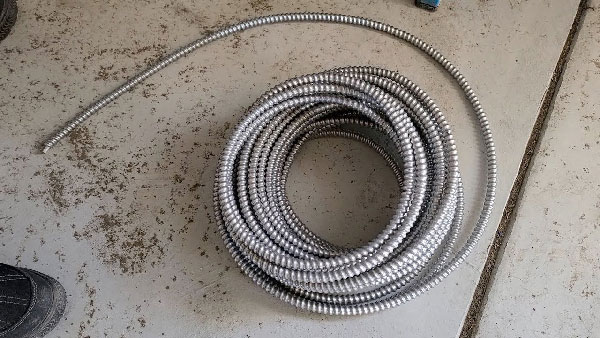
What Is BX Cable Used For.jpg
Understanding when and where to use BX cable—versus Romex, MC cable, or conduit—is essential for code-compliant, safe electrical installations. While BX cable costs more and takes longer to install than Romex, it provides crucial protection in locations where exposed wiring is vulnerable to damage. Conversely, using BX where Romex would suffice wastes money, while using Romex where BX is required violates electrical code and creates safety hazards.
This guide explains exactly where BX cable should be used, the applications it's designed for, and how to determine whether it's the right choice for your project.
What Is BX Cable? Quick Overview
Before diving into applications, let's clarify what BX cable actually is:
BX Cable Definition
BX cable (also called AC cable or armored cable) consists of:
- Insulated electrical wires (typically THHN/THWN)
- Bonding strip or wire (for grounding)
- Flexible interlocking steel or aluminum armor
BX CABLE STRUCTURE

    ┌─────────────────────────┐
    │ ▓▓▓▓▓▓▓▓▓▓▓▓▓▓▓▓▓▓▓▓▓ │ ← Flexible metal armor
    │  ● ● ○                 │   (interlocking steel)
    │  │ │ │                 │
    │  │ │ └─ Bonding strip  │
    │  │ └─── White (neutral)│
    │  └───── Black (hot)    │
    └─────────────────────────┘

    Protected wires inside flexible armor
Key Characteristics
- Protection: Metal armor shields wires from physical damage
- Flexibility: Can be bent around corners (within limits)
- Grounding: Armor can serve as equipment ground path
- Code approval: Approved for exposed residential installations
Primary Uses of BX Cable
1. Exposed Basement Wiring
Most common residential application
BX cable is ideal for basement electrical work because:
✅ Basements often have exposed wiring
- Unfinished ceilings expose wiring to potential damage
- People moving stored items can impact cables
- BX armor protects against accidental impacts
✅ Moisture resistance
- Basements can be damp (though not wet)
- Metal armor provides better moisture protection than Romex jacket
- Prevents moisture penetration to wire insulation
✅ Code compliance
- Many jurisdictions require protected cable in basements
- BX meets code requirements for exposed wiring
- Alternative would be more expensive conduit
Typical basement BX applications:
- Ceiling-mounted light fixtures
- Wall outlets along foundation
- Receptacles on support posts
- Workshop circuits
- Laundry room wiring
2. Garage Electrical Installations
Second most common residential use
Garages present similar challenges to basements:
✅ Physical protection needs
- Vehicles, tools, and equipment pose damage risks
- Exposed wiring vulnerable to impacts
- BX armor prevents wire damage
✅ Code requirements
- NEC requires protected cable below 8 feet in garages
- BX satisfies protection requirements
- Avoids need for conduit in many cases
✅ Durability
- Garages subject to temperature extremes
- Potential for moisture (car snow melt, etc.)
- BX handles these conditions well
Typical garage BX applications:
- Ceiling lights
- Wall receptacles (below 8')
- Garage door opener circuits
- Workbench outlets
- EV charging circuits (some installations)
3. Exposed Wiring in Living Spaces
Old homes and renovations
When wiring must run exposed in finished areas:
✅ Older home retrofits
- Adding circuits to homes with plaster walls
- Avoiding extensive wall demolition
- Surface-mounted wiring solutions
✅ Commercial-look residential
- Industrial/loft aesthetic
- Intentionally exposed wiring as design element
- Metal armor more attractive than conduit
✅ Temporary or semi-permanent installations
- Workshop additions
- Home office circuits
- Basement finishing in stages
Applications in living spaces:
- Surface-mounted outlets in older homes
- Adding circuits without opening walls
- Remodeling with exposed wiring aesthetic
- Studio or loft electrical runs
4. Attic Installations
Where accessible to foot traffic
BX cable protects wiring in trafficked attic areas:
✅ Protection from foot traffic
- Attics used for storage require protected wiring
- People walking in attics can damage Romex
- BX prevents accidental wire damage
✅ Rodent protection
- Metal armor deters rodents from chewing wires
- Common problem in attic spaces
- BX provides mechanical barrier
✅ Accessibility considerations
- Accessible attics require better protection
- BX meets code requirements
- Alternative is running in conduit
Attic BX applications:
- Lighting circuits in finished attic spaces
- Outlet circuits where attic is accessible
- HVAC equipment connections
- Attic fan circuits
5. Commercial Light Industrial
Light commercial and industrial settings
BX cable is used in less demanding commercial applications:
✅ Small commercial spaces
- Retail shops
- Small offices
- Light manufacturing
- Warehouses (residential-type wiring)
✅ Where full conduit not required
- Dry, indoor locations
- Low-abuse environments
- Accessible for maintenance
✅ Cost-effective protection
- Cheaper than full conduit system
- Better protection than Romex
- Faster installation than conduit
Commercial BX applications:
- Office lighting circuits
- Retail store outlets
- Back-room wiring
- Small shop equipment circuits
6. Renovation and Retrofit Projects
Adding circuits to existing buildings
BX cable shines in retrofit situations:
✅ Avoiding wall demolition
- Running exposed where walls can't be opened
- Minimal disruption to occupants
- Faster completion
✅ Historic preservation
- Period-appropriate wiring method
- Matches original wiring in older buildings
- Less invasive than conduit
✅ Cost-effective upgrades
- Adding circuits without major construction
- Basement to attic runs
- Extending existing circuits
Retrofit BX applications:
- Adding outlets to finished basements
- Kitchen remodels (exposed runs in basement below)
- Bathroom exhaust fan circuits
- Upgrading electrical service capacity
Where BX Cable SHOULD Be Used
Code-Required Locations
NEC (National Electrical Code) requires protected cable in:
| Location | Code Requirement | BX Cable Solution |
|---|---|---|
| Exposed in basements | Protection required | ✅ BX satisfies requirement |
| Garages below 8 feet | Protection required | ✅ BX provides protection |
| Accessible attics | Protection if accessible | ✅ BX meets requirement |
| Commercial exposed | Protection in many areas | ✅ BX acceptable in many cases |
Best-Use Scenarios
Choose BX cable when:
✅ Exposed wiring is necessary
- Can't run inside walls
- Code prohibits Romex in location
- Physical protection needed
✅ Conduit is excessive
- Full conduit system too expensive
- Flexibility needed (BX bends easier than conduit)
- Faster installation important
✅ Upgrading old wiring
- Replacing old BX with new BX
- Matching existing installation methods
- Using existing pathways
✅ Moisture concerns (but not wet)
- Damp basements
- Unheated garages
- Better moisture resistance than Romex
✅ Rodent-prone areas
- Attics with rodent issues
- Crawl spaces
- Outbuildings
Where BX Cable SHOULD NOT Be Used
Prohibited Locations
❌ Outdoor exposed wiring
- Not rated for direct weather exposure
- UV degrades insulation
- Use conduit or UF cable instead
❌ Wet locations
- Not waterproof
- Can't be buried underground
- Use conduit with THWN wire
❌ Embedded in concrete
- Not approved for concrete burial
- Use conduit or approved cable type
❌ Hazardous locations
- Requires explosion-proof wiring methods
- Use rigid conduit and specialized equipment
❌ Where subject to severe physical damage
- Heavy industrial settings
- Areas with vehicular traffic
- Use rigid conduit
❌ In contact with masonry, earth, or excessive moisture
- Can corrode over time
- Code prohibits direct earth contact
Where Romex Is Better
Use Romex (NM-B) instead when:
✅ Inside walls and ceilings (concealed)
- Standard residential wiring method
- Less expensive than BX
- Faster to install
✅ Dry, protected locations
- Inside finished walls
- Above ceilings in dry locations
- Protected from physical damage
✅ Above 8 feet in garages
- Code allows Romex above 8 feet
- Cost savings
- Easier installation
Where Conduit Is Required
Use conduit instead when:
✅ Outdoor exposed installations
- Use EMT, IMC, or Rigid conduit
- Better weather protection
- Code required
✅ Underground installations
- Use PVC or Rigid conduit
- Only approved underground method
- Better moisture protection
✅ Commercial buildings (most cases)
- Often requires full conduit
- Better protection
- Code required in many jurisdictions
✅ High-damage risk areas
- Heavy industrial
- High-traffic areas
- Areas subject to vehicle impact
BX Cable Application Examples
Example 1: Unfinished Basement Workshop
Scenario: Adding electrical outlets to a basement workshop area
Why BX is ideal:
- Exposed wiring along ceiling joists
- Potential for physical impacts
- Damp environment (typical basement)
- Code requires protected cable
Installation:
- Run 12/2 BX cable along ceiling joists
- Install metal junction boxes
- Use proper BX connectors
- Support cable every 4.5 feet
Alternative would be:
- EMT conduit (more expensive, more labor)
- Romex (code violation in exposed basement)
Example 2: Garage Outlet Addition
Scenario: Installing new outlets along garage walls for tools
Why BX is appropriate:
- Below 8 feet (requires protection)
- Subject to potential impacts
- Cost-effective protection
- Code compliant
Installation:
- Surface-mount or recessed boxes
- 12/2 BX for 20-amp circuits
- Secure to studs with proper straps
- Use anti-short bushings at terminations
Example 3: Old Home Retrofit
Scenario: Adding outlets to rooms with plaster walls (avoiding wall damage)
Why BX works:
- Can run exposed along baseboards or in corners
- More aesthetically acceptable than conduit
- Historically appropriate for older homes
- Provides necessary protection
Installation:
- Surface-mount boxes painted to match walls
- Run BX along baseboard or crown molding
- Use covers/raceways for cleaner appearance
- Maintain required support spacing
Example 4: Accessible Attic Wiring
Scenario: Installing lights and outlets in attic used for storage
Why BX is necessary:
- Attic is accessible (people walk there)
- Risk of accidental damage to cables
- Rodent protection needed
- Code requires protection
Installation:
- Run along or through joists
- Protect from foot traffic
- Use proper connectors and boxes
- Ensure adequate support
BX Cable Sizing for Common Applications
Residential Circuits
| Application | BX Cable Size | Circuit Breaker | Typical Use |
|---|---|---|---|
| Lighting | 14/2 BX | 15-amp | General lighting |
| General outlets | 14/2 or 12/2 BX | 15 or 20-amp | Basement/garage outlets |
| Kitchen outlets | 12/2 BX | 20-amp | Small appliance circuits |
| Bathroom outlets | 12/2 BX | 20-amp | GFCI-protected circuits |
| 240V appliances | 10/2 or 8/3 BX | 30 or 40-amp | Dryer, range (if allowed) |
Common BX Cable Configurations
12/2 BX:
- 1 black (hot)
- 1 white (neutral)
- 1 ground (bonding strip or separate wire)
- Most common for 20-amp circuits
14/2 BX:
- 1 black (hot)
- 1 white (neutral)
- 1 ground
- Common for 15-amp lighting circuits
12/3 BX:
- 1 black (hot)
- 1 red (hot)
- 1 white (neutral)
- 1 ground
- Three-way switches, multi-wire branch circuits
Installation Guidelines for BX Cable
Key Installation Requirements
Support spacing:
- Within 12 inches of boxes
- Every 4.5 feet along runs
- Use proper cable straps/staples
Bending radius:
- Minimum 5× cable diameter
- Avoid sharp bends (damages armor)
- Use sweep bends, not tight angles
Connectors:
- Use proper BX/AC cable connectors
- Include anti-short bushings
- Ensure locknut is tight
Boxes:
- Metal boxes preferred (better grounding)
- Must be properly secured
- Connectors must be code-compliant
Grounding:
- Bonding strip or ground wire required
- Armor alone not sufficient ground (code change)
- Proper grounding at all terminations
BX Cable vs Alternatives
BX Cable vs Romex (NM-B)
| Factor | BX Cable | Romex |
|---|---|---|
| Protection level | Excellent (metal armor) | Basic (PVC jacket) |
| Approved locations | Exposed in dry locations | Concealed in walls only |
| Cost | Higher ($0.70-1.50/ft) | Lower ($0.30-0.60/ft) |
| Installation speed | Slower (harder to work with) | Faster (easier to handle) |
| Flexibility | Moderate (can bend) | High (very flexible) |
| Durability | Excellent | Good |
When to choose BX over Romex:
- Exposed installations
- Code requires protection
- Better physical protection needed
- Moisture concerns (not wet)
BX Cable vs MC Cable
| Factor | BX Cable (AC) | MC Cable |
|---|---|---|
| Armor material | Steel (older), Aluminum (newer) | Aluminum or steel |
| Grounding | Bonding strip + armor | Separate green wire |
| Code compliance | Residential (older standard) | Commercial and residential |
| Moisture rating | Dry locations | Some rated for wet |
| Cost | Similar | Similar to slightly higher |
Modern note: Many people call any armored cable 'BX,' but technically:
- BX (AC) = Traditional armored cable with bonding strip
- MC = Modern metal-clad cable with separate ground wire
- MC cable has largely replaced BX in new installations
BX Cable vs Conduit
| Factor | BX Cable | EMT Conduit |
|---|---|---|
| Installation | Single-step (cable pre-assembled) | Two-step (conduit, then wires) |
| Cost | Moderate | Higher (material + labor) |
| Flexibility | Good (can bend) | Limited (requires fittings) |
| Protection level | Good | Excellent |
| Future changes | Difficult (fixed) | Easy (pull new wires) |
When to choose conduit over BX:
- Outdoor exposed installations
- Underground burial
- Maximum protection needed
- Future wiring changes anticipated
- Commercial buildings (often required)
Common BX Cable Mistakes to Avoid
Mistake #1: Using BX Outdoors
Problem: BX is not rated for outdoor exposure
- UV degrades wire insulation
- Moisture can enter armor joints
- Code violation
Solution: Use conduit (EMT, IMC, or Rigid) for all outdoor exposed wiring
Mistake #2: Burying BX Underground
Problem: Not approved for direct burial or burial in concrete
Solution: Use PVC conduit with THWN wire or direct-burial UF cable
Mistake #3: Using Romex Where BX Required
Problem: Code requires protected cable in exposed basements/garages
Solution: Always use BX (or conduit) in code-required locations
Mistake #4: Improper Connectors
Problem: Using wrong connector type or forgetting anti-short bushing
- Can damage wire insulation
- Creates shock hazard
- Code violation
Solution: Use proper BX/AC cable connectors with anti-short bushings
Mistake #5: Inadequate Support
Problem: Not supporting cable every 4.5 feet
- Cable sags
- Armor can be damaged
- Code violation
Solution: Support within 12' of boxes and every 4.5' along run
Frequently Asked Questions
Can BX cable be used in walls?
Yes, BX can be run inside walls, but it's usually unnecessary. Romex is cheaper and easier to install for concealed wiring. Use BX in walls only when:
- Required by local code
- Matching existing BX installation
- Extra protection desired
Is BX cable waterproof?
No. BX is rated for dry and damp locations only, not wet locations. Water can enter through joints in the armor. For wet locations, use conduit with appropriate wire.
Can I use BX cable in a crawl space?
It depends:
- ✅ Yes if crawl space is dry and accessible
- ❌ No if subject to moisture or earth contact
- Check local codes (requirements vary)
How long does BX cable last?
30-50+ years when properly installed in appropriate locations. BX from the 1940s-1960s is still functioning in many homes. Factors affecting lifespan:
- Moisture exposure (shortens life)
- Physical damage
- Quality of installation
- Environmental conditions
Do I need a separate ground wire with BX cable?
Modern code requires it. While older BX relied on the armor and bonding strip for grounding, current code requires:
- Separate equipment grounding conductor, OR
- Bonding strip properly terminated
Check your local code for specific requirements.
Conclusion
BX cable (armored cable) is used primarily for exposed electrical wiring in residential basements, garages, and attics where protection from physical damage is required but full conduit isn't necessary. The flexible metal armor protects the insulated wires inside while allowing easier installation than rigid conduit, making it the ideal middle-ground solution between unprotected Romex and fully protected conduit systems.
Key uses for BX cable:
- ✅ Exposed basement wiring (lights and outlets)
- ✅ Garage installations (below 8 feet)
- ✅ Accessible attics (where foot traffic occurs)
- ✅ Old home retrofits (surface-mounted wiring)
- ✅ Light commercial applications
- ✅ Any exposed dry location requiring protected cable
When NOT to use BX:
- ❌ Outdoor exposed wiring (use conduit)
- ❌ Underground burial (use conduit or UF cable)
- ❌ Inside walls where Romex is cheaper and easier
- ❌ Wet locations (use conduit)
Understanding where BX cable is appropriate—and where it's required by code—ensures safe, compliant electrical installations that will provide decades of reliable service.
Planning an electrical project? Always verify local code requirements and consider hiring a licensed electrician for complex installations. Improper electrical work can be dangerous and may violate building codes.


