When selecting copper conductors for electrical or industrial applications, two common terms often appear — annealed copper and bare copper.
Although both are made from pure copper, they differ in manufacturing process, physical properties, and applications.
Understanding the difference between these two materials helps ensure you choose the right wire for your project.
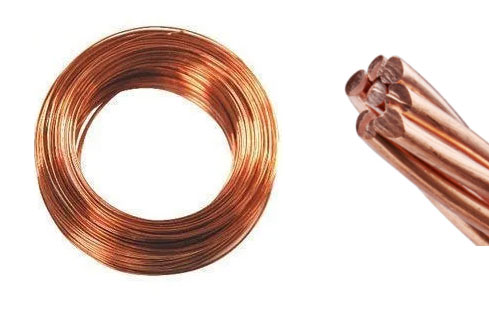
difference between annealed copper and bare copper
1. What Is Annealed Copper?
Annealed copper refers to copper that has been heat-treated to increase its ductility and flexibility.
During the annealing process, the copper wire is heated to a specific temperature and then slowly cooled. This process reduces internal stress and hardness, making the wire softer and easier to bend or draw into thin strands.
Key Features of Annealed Copper:
Soft and flexible: Can be bent, twisted, and coiled without breaking.
Improved conductivity: The heat treatment slightly enhances electrical conductivity.
Easy to work with: Ideal for wiring installations, terminals, and complex cable assemblies.
Corrosion resistance: Maintains copper’s natural resistance to corrosion and oxidation.
Common Applications:
Electrical wiring (especially in flexible cords and building wires)
Automotive and electronics wiring
Power distribution cables
Transformer windings
2. What Is Bare Copper?
Bare copper is copper wire without any coating or insulation, and it may or may not be annealed.
It’s simply copper in its natural, uncoated form — known for its excellent conductivity and durability. Bare copper can be produced as hard-drawn (unannealed) or soft-drawn (annealed), depending on the application.
Key Features of Bare Copper:
Excellent electrical conductivity
High tensile strength (especially in hard-drawn form)
Uninsulated — requires external insulation if used in electrical circuits
Economical and widely available
Common Applications:
Grounding and earthing systems
Overhead transmission lines
Busbars and power distribution networks
Building construction and lightning protection
3. Annealed Copper vs. Bare Copper: Key Differences
| Property | Annealed Copper | Bare Copper |
|---|---|---|
| Definition | Heat-treated copper for softness and flexibility | Pure copper wire without insulation or coating |
| Mechanical Strength | Softer and less tensile strength | Can be hard-drawn (stronger) or soft-drawn |
| Flexibility | Highly flexible and easy to shape | Hard-drawn types are stiffer |
| Conductivity | Slightly higher due to reduced stress | Excellent in both forms |
| Surface | Can be tinned, insulated, or bare | Always bare (uncoated) |
| Applications | Electrical wiring, transformers, electronics | Grounding, overhead lines, busbars |
4. Which One Should You Choose?
✅ Choose Annealed Copper if your project requires:
Flexible wires or cables
Frequent bending or movement (e.g., extension cords, control cables)
Easy installation in tight spaces
✅ Choose Bare Copper if your application involves:
Grounding and bonding systems
High mechanical strength requirements
Outdoor or overhead power lines (with additional protection)
5. Summary
Both annealed copper and bare copper are essential in the electrical industry, but they serve different purposes.
Annealed copper offers superior flexibility and ease of handling, making it ideal for wiring and cabling.
Bare copper provides strength and direct conductivity, best for grounding and power transmission applications.
In short:
Annealed copper = soft and flexible.
Bare copper = strong and conductive.
TOT Wire & Cable supplies a wide range of bare and annealed copper wires, meeting international standards for electrical performance and mechanical reliability.
Contact us today to find the right copper conductor for your next project.