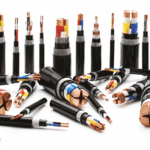
Not All 'Fire Cables' Are Created Equal
In the world of electrical engineering and building safety, the terms 'fire resistant' and 'flame retardant' are often used interchangeably by mistake. However, choosing the wrong one can be the difference between a minor incident and a catastrophic system failure during a fire.
Whether you are looking for a fire resistant electrical cable for an emergency lighting system or a flame retardant material to prevent fire spread in a data center, understanding these technical distinctions is vital for life safety.
I. Flame Retardant Cables: Stopping the Spread
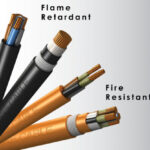
A flame retardant cable is designed to prevent a fire from spreading through the cable network.
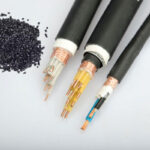
How it Works: These cables are made with flame retardant material (often LSZH or specialized PVC) that is self-extinguishing. When the external heat source is removed, the cable stops burning.
The Goal: To ensure the cable itself does not become a 'fuse' that carries fire from one room to another.
Best For: General wiring in residential and commercial buildings where fire containment is the priority.
Keywords: Often referred to as
flame resistant cableorfire rated wiresin common search queries.
II. Fire Resistant Cables: Keeping the Power On
A fire resistant cable (often called fire proof cable) is a much more robust solution. Its job is not just to stop burning, but to continue functioning while engulfed in flames.
How it Works: These cables utilize a layer of fire-resistant mica tape or ceramic-forming polymers around the conductors. This ensures that even if the outer jacket burns away, the electrical circuit remains intact.
The Goal: Circuit Integrity. It ensures that critical systems—like fire alarms, smoke extraction fans, and emergency elevators—keep working for 60, 90, or 120 minutes during an active fire.
Keywords: This is the high-performance
fire resistant electrical cablerequired for critical infrastructure.
III. Head-to-Head Comparison
| Feature | Flame Retardant | Fire Resistant (Fire Proof) |
| Primary Goal | Prevent fire spread. | Maintain power/signal during fire. |
| Circuit Integrity | No (Fails quickly in fire). | Yes (Maintains circuit for $90+$ mins). |
| Core Material | Flame retardant material jacket. | Mica tape / Fire-resistant barrier. |
| Search Terms | flame resistant cables | fire proof cables, fire safe cable |
| Typical Use | Standard office/home wiring. | Hospitals, tunnels, emergency systems. |
IV. When to Use Fire Proof Cables?
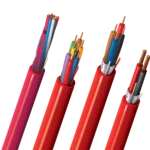
Choosing a fire resistant cable is usually mandated by building codes for 'Life Safety' circuits. You should specify fire rated cables in the following scenarios:
Emergency Lighting: Ensuring exit paths are illuminated so people can escape.
Fire Alarm Systems: Keeping the sensors and sirens active to alert occupants.
Smoke Management: Powering the massive fans that pull toxic smoke out of stairwells.
Firefighting Lifts: Allowing firefighters to move equipment in high-rise buildings.
V. Material Matters: The Role of LSZH
A key component in both types is the use of Low Smoke Zero Halogen (LSZH) materials. In a fire, the smoke is often more lethal than the heat. LSZH cables (a type of fire safe cable) ensure that if the cable does burn, it produces minimal smoke and zero toxic acid gases, significantly increasing the chances of survival for people trapped in the building.
Conclusion: Circuit Integrity Saves Lives
While flame resistant cables are excellent for general fire prevention, they cannot replace the fire resistant electrical cable in critical systems. If your application requires the lights to stay on and the alarms to keep ringing while the building is burning, a fire proof cable is your only reliable choice.