4/0 AWG copper wire is one of the largest and heaviest standard conductor sizes used in residential, commercial, and industrial power distribution. Because of its size, weight becomes a key factor when planning shipping, installation, conduit fill, and voltage-drop calculations.
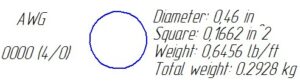
how much does 4/0 copper weigh
This guide explains how much 4/0 copper wire weighs, including bare copper, THHN/THWN-2, underground cable, and service-entrance types.
What Is the Weight of 4/0 Bare Copper Wire?
Bare copper is the simplest form—no insulation, no jacket, only pure copper.
Industry data shows:
Bare Copper 4/0 AWG: 0.64–0.66 lb per foot
(≈ 640–660 lb per 1,000 ft)
This applies to soft-drawn or hard-drawn stranded copper commonly used for grounding, bonding, or utility applications.
Quick Reference
| Wire Type | Weight per Foot | Weight per 1000 ft |
|---|---|---|
| Bare Copper 4/0 AWG | 0.64–0.66 lb/ft | 640–660 lb |
Weight of Insulated 4/0 Copper Wires
Once insulation or jacketing is added, the weight increases.
1. THHN / THWN-2 4/0 AWG Copper
Approx. 0.70–0.72 lb per foot
Extra weight comes from PVC insulation + nylon jacket.
2. XHHW-2 4/0 Copper
Approx. 0.73–0.75 lb per foot
XLPE insulation is slightly thicker than THHN.
3. USE-2 / RHH / RHW-2
Approx. 0.80–0.85 lb per foot
Heavier due to thicker moisture-resistant insulation.
4. URD / Triplex / Quadplex (Aluminum instead of copper)
Copper versions are rare, but insulated copper 4/0 service cable typically weighs:
0.75–0.90 lb/ft depending on the number of conductors.
Why Does 4/0 Copper Wire Weight Matter?
1. Shipping & Handling
Large reels of 4/0 copper are extremely heavy.
Example:
A full 1,000 ft spool of insulated 4/0 THHN weighs 700+ lb.
This affects:
Freight cost
Forklift requirements
Reel size and handling safety
2. Conduit Fill Calculations
Weight influences how difficult the pull will be:
Heavier wires require stronger pulling equipment.
Lubricants, larger bend radiuses, and proper cable tray support may be required.
3. Electrical System Design
Voltage drop calculations depend on:
Conductor length
Material resistivity (impacted by temperature & installation conditions)
4. Grounding & Bonding Installations
Bare 4/0 copper grounding conductors can be difficult to install due to weight and stiffness.
4/0 Copper Weight Comparison Table
| Type of 4/0 Copper Wire | Approx. Weight per Foot | Notes |
|---|---|---|
| Bare Copper | 0.64–0.66 lb/ft | Pure conductor only |
| THHN / THWN-2 | 0.70–0.72 lb/ft | PVC + nylon |
| XHHW-2 | 0.73–0.75 lb/ft | XLPE insulation |
| RHH / RHW-2 / USE-2 | 0.80–0.85 lb/ft | Thick insulation for outdoor use |
| 4/0-2 or 4/0-3 Copper Cable | 1.5–3.0 lb/ft | Multiple conductors in one jacket |
How to Estimate Total Weight for a Job
You can calculate total weight using a simple formula:
Weight (lb) = Length (ft) × Weight per Foot
Example:
300 ft of 4/0 THHN
= 300 × 0.72
= 216 lb total
Is 4/0 Copper Always the Same Weight?
Not exactly. Weight varies slightly depending on:
✔ Manufacturer
✔ Insulation material
✔ Stranding (compact vs. concentric)
✔ Temperature rating
However, the ranges above are standard across North America and widely used for estimating.
Conclusion
4/0 copper wire is heavy, and knowing its weight is essential for planning any electrical installation. Here’s the simplified takeaway:
Bare 4/0 Copper: ~0.65 lb per foot
Insulated 4/0 Copper (THHN/XHHW): ~0.70–0.75 lb per foot
Thick-jacketed outdoor cables: ~0.80+ lb per foot