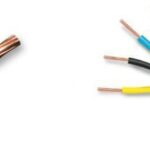
A Romex wire size chart shows the relationship between wire gauge (14, 12, 10, 8, 6 AWG), maximum ampacity (current-carrying capacity), appropriate circuit breaker size, and typical applications—helping you select the correct wire size for safe, code-compliant electrical installations. Choosing the wrong wire size can lead to overheating, fire hazards, and code violations, while oversizing wastes money on unnecessarily expensive wire.
Understanding wire sizing is one of the most critical aspects of electrical work. Too small, and the wire overheats under load, creating a fire risk. Too large, and you've spent more than necessary. The right size ensures safe operation, meets electrical code requirements, and optimizes your budget.
This comprehensive guide provides complete Romex wire sizing charts, explains how to choose the correct size for any application, covers ampacity ratings, voltage drop calculations, and helps you avoid common sizing mistakes.

Quick Reference: Romex Wire Size Chart
Standard Residential Romex Sizes
| Wire Size (AWG) | Max Ampacity | Circuit Breaker | Typical Romex Type | Common Applications |
|---|---|---|---|---|
| 14 AWG | 15 amps | 15-amp breaker | 14/2, 14/3 | Lighting circuits, bedroom outlets |
| 12 AWG | 20 amps | 20-amp breaker | 12/2, 12/3 | General outlets, kitchen, bathroom |
| 10 AWG | 30 amps | 30-amp breaker | 10/2, 10/3 | Water heater, window AC, dryer |
| 8 AWG | 40 amps | 40-amp breaker | 8/3 | Electric range (small), sub-panel |
| 6 AWG | 55 amps | 50-amp breaker | 6/3 | Electric range (large), sub-panel |
| 4 AWG | 70 amps | 60-amp breaker | 4/3 | Large sub-panel, heavy appliances |
| 3 AWG | 85 amps | 80-amp breaker | 3/3 | Main service upgrades |
| 2 AWG | 95 amps | 90-amp breaker | 2/3 | Main service, large sub-panels |
Important: Always match circuit breaker size to wire gauge—never exceed the wire's ampacity rating.
Understanding Romex Wire Sizing
What Is AWG?
AWG = American Wire Gauge
The standard system for measuring wire diameter:
- Higher number = Thinner wire (less capacity)
- Lower number = Thicker wire (more capacity)
WIRE SIZE COMPARISON (Approximate Diameters)

14 AWG: ━━━  (2.1 mm / 0.083')
12 AWG: ━━━━  (2.7 mm / 0.106')
10 AWG: ━━━━━  (3.3 mm / 0.130')
8 AWG:  ━━━━━━  (4.3 mm / 0.170')
6 AWG:  ━━━━━━━━  (5.4 mm / 0.212')

Thicker = More capacity
What Is Ampacity?
Ampacity = Maximum current (amps) a wire can safely carry continuously
Factors affecting ampacity:
- Wire size (larger = more capacity)
- Insulation temperature rating (NM-B = 90°C)
- Ambient temperature (hotter environment = lower capacity)
- Bundling (multiple cables together = lower capacity)
- Length (longer runs = voltage drop considerations)
Complete Romex Ampacity Chart
Standard NM-B Cable Ratings (60°C Column)
While Romex is rated for 90°C, NEC requires using the 60°C ampacity column for standard residential circuits:
| Wire Size | Conductor Material | 60°C Ampacity | 75°C Ampacity | 90°C Ampacity |
|---|---|---|---|---|
| 14 AWG | Copper | 15 A | 20 A | 25 A |
| 12 AWG | Copper | 20 A | 25 A | 30 A |
| 10 AWG | Copper | 30 A | 35 A | 40 A |
| 8 AWG | Copper | 40 A | 50 A | 55 A |
| 6 AWG | Copper | 55 A | 65 A | 75 A |
| 4 AWG | Copper | 70 A | 85 A | 95 A |
| 3 AWG | Copper | 85 A | 100 A | 110 A |
| 2 AWG | Copper | 95 A | 115 A | 130 A |
| 1 AWG | Copper | 110 A | 130 A | 150 A |
| 1/0 AWG | Copper | 125 A | 150 A | 170 A |
Source: NEC Table 310.16 (formerly 310.15(B)(16))
Why use 60°C column?
- Most terminations (breakers, outlets, switches) rated for 60°C or 75°C
- Safety margin
- Code requirement for most residential installations
Romex Wire Size by Application
Lighting Circuits
Recommended: 14/2 Romex
| Specification | Value |
|---|---|
| Wire size | 14 AWG |
| Circuit breaker | 15-amp |
| Max continuous load | 12 amps (80% of breaker) |
| Number of lights | No NEC limit (limited by load) |
Typical applications:
- Ceiling lights
- Recessed lighting
- Wall sconces
- Ceiling fans (without heaters)
- Under-cabinet lighting
Note: Some electricians prefer 12/2 for lighting to allow future flexibility.
General Outlet Circuits (Bedrooms, Living Rooms)
Recommended: 12/2 Romex (preferred) or 14/2 Romex (acceptable)
| Specification | 12/2 (Preferred) | 14/2 (Minimum) |
|---|---|---|
| Wire size | 12 AWG | 14 AWG |
| Circuit breaker | 20-amp | 15-amp |
| Max continuous load | 16 amps | 12 amps |
Why 12/2 is preferred:
- More capacity for modern loads
- Allows power tools, vacuums
- Future-proofs installation
- Only slightly more expensive
Kitchen Counter Outlets (Small Appliance Circuits)
Required: 12/2 Romex (Code requirement)
| Specification | Value |
|---|---|
| Wire size | 12 AWG minimum |
| Circuit breaker | 20-amp |
| Number of circuits | Minimum 2 required |
| Max continuous load | 16 amps per circuit |
Code requirements (NEC 210.11(C)(1)):
- At least two 20-amp circuits
- Serves countertop outlets only
- Cannot serve other loads
Appliances on these circuits:
- Toaster
- Coffee maker
- Blender
- Microwave (if not dedicated)
- Food processor
Bathroom Outlet Circuits
Required: 12/2 Romex
| Specification | Value |
|---|---|
| Wire size | 12 AWG |
| Circuit breaker | 20-amp |
| GFCI protection | Required |
Code requirements:
- 20-amp circuit required (NEC 210.11(C)(3))
- GFCI protection mandatory
- Can serve multiple bathrooms (if no other loads)
Dedicated Appliance Circuits
Dishwasher
| Specification | Value |
|---|---|
| Recommended size | 12/2 Romex |
| Circuit breaker | 20-amp |
| Dedicated circuit | Yes |
Garbage Disposal
| Specification | Value |
|---|---|
| Recommended size | 12/2 Romex |
| Circuit breaker | 20-amp |
| Dedicated circuit | Preferred (can share with dishwasher) |
Refrigerator
| Specification | Value |
|---|---|
| Recommended size | 12/2 Romex |
| Circuit breaker | 20-amp |
| Dedicated circuit | Recommended (not required) |
Microwave (Built-in)
| Specification | Value |
|---|---|
| Recommended size | 12/2 Romex (minimum) |
| Circuit breaker | 20-amp (check appliance rating) |
| Dedicated circuit | Yes |
Note: Some high-wattage microwaves may require 10/2 and 30-amp circuit. Check manufacturer specifications.
240-Volt Appliances
Electric Water Heater
| Specification | Value |
|---|---|
| Wire size | 10/2 Romex |
| Circuit breaker | 30-amp (double-pole) |
| Voltage | 240V |
Typical ratings:
- 30-50 gallon: 3,800-4,500 watts
- 240V × 20A = 4,800 watts capacity
Window Air Conditioner (Large)
| Specification | Small AC (≤12,000 BTU) | Large AC (>12,000 BTU) |
|---|---|---|
| Wire size | 12/2 Romex | 10/2 Romex |
| Circuit breaker | 20-amp | 30-amp |
| Voltage | 120V or 240V | 240V |
Always check manufacturer specifications
Electric Clothes Dryer
| Specification | Value |
|---|---|
| Wire size | 10/3 Romex |
| Circuit breaker | 30-amp (double-pole) |
| Voltage | 240V |
| Configuration | Hot-Hot-Neutral-Ground |
Note: Some large dryers require 8/3 and 40-amp circuit.
Electric Range/Oven
| Specification | Small Range | Large Range |
|---|---|---|
| Wire size | 8/3 Romex | 6/3 Romex |
| Circuit breaker | 40-amp | 50-amp |
| Voltage | 240V | 240V |
Typical ratings:
- Small ranges: 6,000-8,000 watts
- Large ranges: 12,000-15,000 watts
Central Air Conditioner
| Specification | Typical Value |
|---|---|
| Wire size | 10/2 or 8/2 (depends on unit) |
| Circuit breaker | 30-40 amp |
| Voltage | 240V |
Must check manufacturer nameplate for exact requirements
Romex Wire Size Selection Guide
Step-by-Step Sizing Process
Step 1: Calculate Total Load
Add up the wattage of all devices on the circuit:
Example: Kitchen counter outlets
- Coffee maker: 1,000W
- Toaster: 1,200W
- Blender: 400W
Total: 2,600W
Step 2: Calculate Required Amperage
Formula: Amps = Watts ÷ Volts
Example:
2,600W ÷ 120V = 21.7 amps

This exceeds 20 amps, so you need:
- Multiple circuits, OR
- Larger wire (not allowed for standard outlets)

Solution: Two 20-amp circuits (code requires this for kitchens anyway)
Step 3: Apply 80% Rule
Continuous loads (operate for 3+ hours) must not exceed 80% of circuit capacity:
20-amp circuit × 80% = 16 amps continuous maximum
15-amp circuit × 80% = 12 amps continuous maximum
Step 4: Select Wire Size
Based on calculated amperage:
| Required Amps | Wire Size | Circuit Breaker |
|---|---|---|
| Up to 15A | 14 AWG | 15-amp |
| 16-20A | 12 AWG | 20-amp |
| 21-30A | 10 AWG | 30-amp |
| 31-40A | 8 AWG | 40-amp |
| 41-55A | 6 AWG | 50-amp |
Step 5: Check Voltage Drop
For runs over 50-100 feet, voltage drop becomes significant.
Voltage Drop Considerations
Why Voltage Drop Matters
Long wire runs cause voltage drop:
- Resistance in wire
- Less voltage at appliance
- Reduced performance
- Potential code violation
Acceptable Voltage Drop
NEC recommendations:
- 3% maximum for branch circuits
- 5% maximum combined (feeder + branch)
Example calculation:
120V circuit with 3% drop:
120V × 0.03 = 3.6V drop
116.4V delivered (acceptable)

120V × 0.05 = 6V drop
114V delivered (marginal)
Voltage Drop Chart for Romex
120V circuits at 80% capacity:
| Wire Size | 50 ft | 75 ft | 100 ft | 150 ft | 200 ft |
|---|---|---|---|---|---|
| 14 AWG (12A) | 1.8% | 2.7% | 3.6% | 5.4% | 7.2% |
| 12 AWG (16A) | 1.7% | 2.6% | 3.4% | 5.1% | 6.8% |
| 10 AWG (24A) | 1.6% | 2.4% | 3.2% | 4.8% | 6.4% |
🔴 = Over 5% (upsize wire recommended)
🟡 = 3-5% (marginal, consider upsizing)
🟢 = Under 3% (acceptable)
When to Upsize for Voltage Drop
Upsize one gauge when:
- Run exceeds 100 feet
- Voltage drop calculation shows >3%
- Running to outbuilding/detached garage
- Powering sensitive electronics
Example:
150-foot run to garage for outlets
Standard: 12/2 for 20-amp circuit
Voltage drop: 5.1% (marginal)
Better: 10/2 for reduced drop to 3.2%
Derating Factors
Multiple Cables Bundled Together
When multiple cables run together, heat buildup reduces ampacity:
| Number of Conductors | Derating Factor |
|---|---|
| 1-3 | 100% (no derating) |
| 4-6 | 80% |
| 7-9 | 70% |
| 10-20 | 50% |
Example:
Five 12/2 Romex cables bundled together:
Normal ampacity: 20A
Derated: 20A × 80% = 16A maximum
Must use 15-amp breaker
Where bundling occurs:
- Multiple cables through same hole
- Tight bundle in conduit
- Bunched together in attic/crawl space
High Ambient Temperature
Standard ampacity assumes 86°F (30°C) ambient temperature:
| Ambient Temperature | Derating Factor |
|---|---|
| 86°F (30°C) or less | 100% |
| 87-95°F (31-35°C) | 94% |
| 96-104°F (36-40°C) | 88% |
| 105-113°F (41-45°C) | 82% |
Where this applies:
- Attics in summer
- Near heating equipment
- Uninsulated outdoor enclosures
Romex Wire Gauge Chart (Physical Dimensions)
Wire Diameter and Coverage
| AWG | Diameter (inches) | Diameter (mm) | Circular Mils | Approx. Weight (lb/1000ft) |
|---|---|---|---|---|
| 14 | 0.0641 | 1.63 | 4,107 | 12.4 |
| 12 | 0.0808 | 2.05 | 6,530 | 19.8 |
| 10 | 0.1019 | 2.59 | 10,381 | 31.4 |
| 8 | 0.1285 | 3.26 | 16,510 | 50.0 |
| 6 | 0.162 | 4.11 | 26,240 | 79.5 |
| 4 | 0.204 | 5.19 | 41,740 | 126.4 |
| 2 | 0.258 | 6.54 | 66,360 | 200.9 |
Common Romex Wire Sizing Mistakes
Mistake #1: Matching Wire to Outlet Rating (Not Load)
❌ Wrong thinking: 'I'm installing 20-amp outlets, so I need 12-gauge wire.'
✅ Correct approach: Calculate actual load and required circuit capacity. Outlet rating is maximum, not requirement.
Reality:
- 20-amp outlets can be on 20-amp circuit (12 AWG)
- 15-amp outlets can be on 15-amp circuit (14 AWG)
- 15-amp outlets can be on 20-amp circuit (12 AWG)
- 20-amp outlets CANNOT be on 15-amp circuit
Mistake #2: Undersizing Based on Single Appliance
❌ Wrong: 'My microwave is 1,000W = 8.3A, so 14-gauge is plenty.'
✅ Correct: Account for continuous operation and code requirements:
- Continuous loads: 125% (1.25×)
- Code minimums (kitchen = 20A minimum)
Mistake #3: Ignoring Voltage Drop on Long Runs
❌ Wrong: '100 feet to shed, 12-gauge for 20-amp circuit.'
✅ Correct: Calculate voltage drop, upsize if needed:
- 100 feet 12 AWG at 16A = 3.4% drop (marginal)
- Better: Use 10 AWG = 2.1% drop
Mistake #4: Oversizing Breaker to Wire
❌ Dangerous: 'Wire seems hot, I'll use a 30-amp breaker on this 14-gauge.'
✅ Safe: Wire determines maximum breaker size:
- 14 AWG → MAX 15-amp breaker
- 12 AWG → MAX 20-amp breaker
- Never exceed wire capacity!
Mistake #5: Not Accounting for Derating
❌ Wrong: 'Six cables bundled, all good for 20 amps each.'
✅ Correct: Apply derating factor:
- 6 cables = 80% derating
- 20A × 80% = 16A maximum
- Use 15-amp breakers
Quick Reference: Choose Your Wire Size
By Circuit Type
| Circuit Type | Wire Size | Breaker |
|---|---|---|
| Lighting | 14/2 | 15A |
| Bedroom outlets | 12/2 | 20A |
| Living room outlets | 12/2 | 20A |
| Kitchen counter | 12/2 | 20A |
| Bathroom | 12/2 | 20A |
| Dishwasher | 12/2 | 20A |
| Disposal | 12/2 | 20A |
| Refrigerator | 12/2 | 20A |
| Microwave | 12/2 | 20A |
| Water heater | 10/2 | 30A |
| Dryer | 10/3 | 30A |
| Range (small) | 8/3 | 40A |
| Range (large) | 6/3 | 50A |
By Amperage Need
| If You Need | Use This Wire | Max Breaker |
|---|---|---|
| Up to 15A | 14 AWG | 15A |
| 16-20A | 12 AWG | 20A |
| 21-30A | 10 AWG | 30A |
| 31-40A | 8 AWG | 40A |
| 41-55A | 6 AWG | 50A |
| 56-70A | 4 AWG | 60A |
Frequently Asked Questions
Can I use 12-gauge wire on a 15-amp circuit?
Yes, absolutely. You can always use larger wire than the minimum required. It's safer and provides more capacity. The breaker size is determined by the smallest wire in the circuit.
Can I put a 20-amp breaker on 14-gauge wire?
NO. This is dangerous and violates code. 14-gauge wire has a maximum ampacity of 15 amps. Using a 20-amp breaker creates a fire hazard—the wire will overheat before the breaker trips.
How do I know what size Romex is in my walls?
Check the printing on the cable jacket:
- '14/2' or '14/3' = 14-gauge
- '12/2' or '12/3' = 12-gauge
- '10/2' or '10/3' = 10-gauge
Also check your breaker panel—breaker size indicates minimum wire size (15A = 14 AWG minimum, 20A = 12 AWG minimum).
Is 14-gauge wire still allowed?
Yes, for 15-amp circuits. However, many electricians prefer 12-gauge throughout the house for consistency and future flexibility.
What happens if I use wire that's too small?
Wire that's too small for the load will:
- Overheat under load
- Potentially melt insulation
- Create fire hazard
- Violate electrical code
The circuit breaker should trip before this happens (if properly sized).
What size wire for 100 amp sub-panel?
Depends on distance:
- Under 50 feet: 3 AWG copper
- 50-100 feet: 2 AWG copper
- Over 100 feet: 1 AWG or larger
Always calculate voltage drop for sub-panel feeders.
Conclusion
Selecting the correct Romex wire size ensures safe, code-compliant electrical installations that handle expected loads without overheating. The fundamental rule is simple: match wire size to circuit ampacity, and never exceed the wire's capacity with an oversized breaker.
Key takeaways:
- 14 AWG (14/2, 14/3): Maximum 15-amp circuits—lighting and bedroom outlets
- 12 AWG (12/2, 12/3): Maximum 20-amp circuits—kitchens, bathrooms, general outlets
- 10 AWG (10/2, 10/3): Maximum 30-amp circuits—water heaters, dryers, large appliances
- 8 AWG and larger: 40+ amp circuits—electric ranges, sub-panels
Always calculate loads, account for voltage drop on long runs, apply derating factors when cables are bundled, and follow NEC requirements. When in doubt, upsize—it's always safer and provides future flexibility.
Related Guides:
- What Is Romex Wiring? - Complete guide to NM-B cable
- Can You Run Romex in Conduit? - Installation methods
- What Does NM-B Stand For? - Technical specifications
- Electrical Conduit Guide - Alternative wiring methods
Planning electrical work? Always verify local code requirements, obtain necessary permits, and consider hiring a licensed electrician for complex installations. Improper wire sizing creates serious fire and safety hazards.