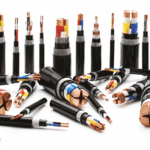
Why Standards Matter for Fire Safety
When it comes to fire rated wires, 'good enough' is never an option. The performance of a fire resistance cable is governed by strict international and regional standards. These benchmarks ensure that in the event of a blaze, the cable will not only resist burning but also maintain the critical 'circuit integrity' needed to save lives.
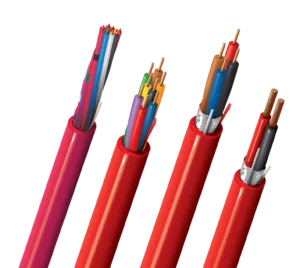
fire rated cables
For engineers and contractors, understanding these codes is the first step toward building a compliant and safe electrical infrastructure.
I. International Standards: IEC 60331 vs. IEC 60332
The International Electrotechnical Commission (IEC) provides the most widely recognized testing methods for fire-related cable performance.
1. IEC 60331: The Standard for Fire Resistance
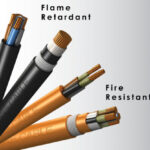
This is the 'survival' test. It measures circuit integrity—the ability of the cable to continue carrying electricity while being exposed to direct flame.
The Test: The cable is subjected to a flame temperature of at least 750°C.
The Goal: The cable must remain operational (no short circuit or fuse failure) for a specified duration, typically 90 minutes.
Keywords: This is the primary standard for a high-quality fire resistant electrical cable.
2. IEC 60332: The Standard for Flame Retardancy
Unlike 60331, this test measures how well the cable stops the spread of fire.
The Test: A vertical cable sample is exposed to a burner. The flame must self-extinguish within a certain distance from the source once the burner is removed.
Keyword Insight: While important, this does not guarantee the cable will work during a fire; it only ensures the cable won't act as a fuel source.
II. The Gold Standard: BS 6387 (Category CWZ)
In many regions, particularly those following British Standards, BS 6387 is the ultimate benchmark for fire rated cables used in emergency circuits. It uses a three-letter classification system: CWZ.
| Category | Test Type | Performance Requirement |
| C | Fire Alone | Resistant to fire at 950°C for 3 hours. |
| W | Fire & Water | Resistant to fire at 650°C for 15 mins, followed by 15 mins of fire and water spray. |
| Z | Fire & Mechanical Shock | Resistant to fire at 950°C with mechanical pulling/shocks every 30 seconds for 15 mins. |
A cable rated as BS 6387 CWZ is considered a premium fire safe cable, capable of withstanding fire, the water from fire sprinklers, and the structural vibration of a collapsing building.
III. Circuit Integrity (PH Ratings)
You may also encounter 'PH' ratings (e.g., PH30, PH60, PH120). This refers to the duration (in minutes) that a fire resistance cable can maintain its function under test conditions.
PH120: Means the cable provides 2 hours of circuit integrity. This is often mandatory for high-rise buildings and complex tunnels where evacuation times are longer.
IV. Specifying the Right Fire Rated Wires
When reviewing technical data sheets for fire resistant electrical cable, follow this checklist:
Check the Voltage Rating: Ensure it matches your system (e.g., 300/500V or 600/1000V).
Verify the Halogen Content: Look for LSZH (Low Smoke Zero Halogen) to prevent toxic gas release.
Confirm the Certificate: Ensure the cable has been tested by a third-party laboratory (like LPCB or UL).
Conclusion: Compliance is Not Optional
Selecting the correct fire resistance cable requires more than just looking at the price. By adhering to IEC and BS standards, you ensure that your fire rated cables will perform exactly when they are needed most—in the heat of a crisis.
Always verify that your fire rated wires carry the necessary certifications to meet local building codes and safety regulations.