
what is romex wiring
Romex wiring is a brand name for non-metallic sheathed cable (NM-B) that contains insulated electrical wires bundled together inside a flexible plastic jacket—it's the most common type of electrical wiring used inside walls and ceilings of residential homes throughout North America. When you open a wall in almost any modern house, the flat, beige or white cable you see running between studs is most likely Romex (or a similar NM-B cable brand).
The term 'Romex' has become so ubiquitous that people use it like 'Kleenex' for tissues—asking for 'Romex' at a hardware store when they actually mean any brand of NM-B cable. This guide explains exactly what Romex wiring is, how it's constructed, where it can (and cannot) be used, and why it's become the standard for residential electrical installations.
Whether you're a homeowner trying to understand your electrical system, a DIY enthusiast planning a project, or just curious about what's behind your walls, this comprehensive guide covers everything you need to know about Romex wiring.
What Is Romex? The Technical Definition
Romex vs NM-B Cable
Romex = Brand name (manufactured by Southwire Company)
NM-B = Technical designation (Non-Metallic sheathed cable, type B)
ROMEX = BRAND NAME
(Like Kleenex is to tissues)

NM-B = TECHNICAL NAME
(Like facial tissue)

All Romex is NM-B cable
Not all NM-B cable is technically 'Romex' brand
What 'NM-B' means:
- NM = Non-Metallic sheathed cable
- -B = Type B designation (90°C rated)
- See our detailed guide: What Does NM-B Stand For?
Basic Definition
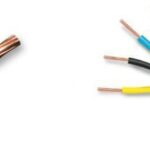
Romex wiring consists of:
- 2 or 3 insulated current-carrying wires (THHN/THWN)
- 1 bare or green ground wire
- Flexible PVC outer jacket (sheathing)
All wires pre-assembled and protected in a single, easy-to-install cable.
What Does Romex Wire Look Like?
External Appearance
ROMEX CABLE - EXTERNAL VIEW

    ┌─────────────────────────────────┐
    │                                 │ ← Flat, flexible
    │  14/2 W/G  600V                │   plastic jacket
    │  ROMEX   TYPE NM-B             │   (usually white,
    │                                 │   beige, or yellow)
    └─────────────────────────────────┘

    Printing shows:
    - Wire size (14/2)
    - With ground (W/G)
    - Voltage rating
    - Manufacturer name
    - Type (NM-B)
Internal Structure
ROMEX WIRE - CROSS SECTION (14/2 Example)

    ┌──────────────────────────────────┐
    │  ┌────┐  ┌────┐       ○         │
    │  │    │  │    │      bare       │ ← PVC outer
    │  │    │  │    │     ground      │   jacket
    │  └────┘  └────┘                 │
    │  Black   White                   │
    │  (Hot)   (Neutral)               │
    └──────────────────────────────────┘

    Individual insulated wires
    inside protective sheath
Color coding:
- Black = Hot (line, live)
- White = Neutral
- Red = Second hot (in 3-wire cable)
- Bare copper or Green = Ground
Types of Romex Wiring
By Wire Count
14/2 Romex (Most Common for Lighting)
14/2 W/G:
- 1 × 14 AWG black (hot)
- 1 × 14 AWG white (neutral)
- 1 × 14 AWG bare (ground)
Used for:
- Lighting circuits (15-amp)
- General outlets (15-amp circuits)
- Bedroom and living room outlets
12/2 Romex (Most Common for Outlets)
12/2 W/G:
- 1 × 12 AWG black (hot)
- 1 × 12 AWG white (neutral)
- 1 × 12 AWG bare (ground)
Used for:
- General outlets (20-amp circuits)
- Kitchen counter outlets
- Bathroom outlets
- Garage circuits
14/3 Romex (Three-Way Switches)
14/3 W/G:
- 1 × 14 AWG black (hot)
- 1 × 14 AWG red (hot/traveler)
- 1 × 14 AWG white (neutral)
- 1 × 14 AWG bare (ground)
Used for:
- Three-way switch circuits
- Split-receptacle circuits
- Multi-wire branch circuits
12/3 Romex
Used for:
- Three-way switches (20-amp)
- Split kitchen outlets
- Multi-wire branch circuits (20-amp)
10/2 and 10/3 Romex (Heavy Appliances)
Used for:
- Electric water heaters (10/2, 30-amp)
- Electric dryers (10/3, 30-amp)
- Window AC units (10/2, 30-amp)
- Some electric ranges
8/3 and 6/3 Romex (Large Appliances)
Used for:
- Electric ranges (8/3 or 6/3, 40-50 amp)
- Large electric dryers
- Sub-panels
Common Romex Types Summary
| Type | Wires | Circuit Breaker | Typical Use |
|---|---|---|---|
| 14/2 | Hot, Neutral, Ground | 15-amp | Lighting, general outlets |
| 12/2 | Hot, Neutral, Ground | 20-amp | Kitchen, bath, garage outlets |
| 14/3 | 2 Hots, Neutral, Ground | 15-amp | Three-way switches |
| 12/3 | 2 Hots, Neutral, Ground | 20-amp | Kitchen splits, 3-ways |
| 10/2 | Hot, Neutral, Ground | 30-amp | Water heater, dryer |
| 10/3 | 2 Hots, Neutral, Ground | 30-amp | Electric dryer |
| 8/3 | 2 Hots, Neutral, Ground | 40-amp | Electric range |
| 6/3 | 2 Hots, Neutral, Ground | 50-amp | Large electric range |
What Is Romex Wire Used For?
Primary Residential Applications
1. Inside Walls and Ceilings (Most Common)
Romex is designed for concealed residential wiring:
✅ Inside finished walls
- Between studs
- Protected from damage
- Dry locations only
✅ Above ceilings
- Running to light fixtures
- Between floors
- Attic spaces (with protection)
✅ Under floors
- In crawl spaces (if dry)
- Between joists
- Basement ceilings
2. Residential Circuits
Lighting circuits:
- Ceiling lights
- Wall switches
- Recessed lighting
- Ceiling fans
Outlet circuits:
- Bedroom outlets
- Living room outlets
- Dining room outlets
- Home office circuits
Kitchen circuits:
- Counter outlets (20-amp required)
- Small appliance circuits
- Refrigerator circuit
Bathroom circuits:
- Outlet circuits (20-amp, GFCI)
- Exhaust fans
- Vanity lights
Appliance circuits:
- Dishwasher
- Garbage disposal
- Microwave (dedicated)
- Electric water heater
- Dryer
3. Where Romex Is Code-Approved
NEC (National Electrical Code) allows Romex in:
✅ One and two-family dwellings
- Single-family homes
- Duplexes
- Townhouses
✅ Multi-family dwellings
- Inside individual units
- Protected locations
- Not in common areas
✅ Dry locations
- Inside conditioned spaces
- Protected from moisture
✅ Concealed installations
- Inside walls
- Above ceilings
- Under floors
Where Romex CANNOT Be Used
Code-Prohibited Locations
❌ Exposed in garages (below 8 feet)
- Must use conduit or BX cable
- Protection from physical damage required
❌ Exposed in unfinished basements
- Many jurisdictions require protection
- Use BX cable or conduit for exposed runs
- Check local codes
❌ Outdoor installations
- Not rated for weather exposure
- Use conduit with THWN wire or UF cable
❌ Wet or damp locations
- Bathrooms (exposed wiring)
- Laundry rooms (exposed)
- Any location subject to moisture
❌ Embedded in concrete
- Not approved for concrete pour
- Use conduit
❌ Underground burial
- Not rated for direct burial
- Use UF cable or conduit
❌ Commercial buildings (most cases)
- Typically requires conduit or MC cable
- Check local commercial codes
❌ Exposed to physical damage
- High-traffic areas
- Where subject to impact
- Use protected methods
Is Romex Wiring Safe?
Yes—When Properly Installed
Common question: 'Is romex wiring safe?'
Answer: Romex is completely safe when:
- ✅ Correctly sized for the circuit
- ✅ Properly installed per NEC code
- ✅ Used in approved locations only
- ✅ Protected from physical damage
- ✅ Secured and supported correctly
Safety Features of Romex
Modern Romex (NM-B) includes:
- 90°C temperature rating
- Won't melt under normal loads
- Safety margin for temperature rise
- Color-coded wires
- Prevents incorrect connections
- Clear identification
- Ground wire included
- Equipment grounding
- Shock protection
- Flame-retardant jacket
- Inhibits fire spread
- Meets fire safety standards
- Clearly marked
- Wire size printed on jacket
- Voltage rating visible
- Easy verification
When Romex Can Be Unsafe
Improper use creates hazards:
❌ Wrong size for circuit
- Overheating risk
- Fire hazard
- Must match breaker size
❌ Damaged insulation
- Exposed conductors
- Shock hazard
- Short circuit risk
❌ Used in prohibited locations
- Code violations
- Moisture damage
- Physical damage risk
❌ Poor connections
- Overheating
- Arcing
- Fire risk
Why Is Romex 'Illegal' in Some Places?
Addressing the Misconception
Search query: 'why is romex illegal'
Truth: Romex is NOT illegal—but it has limitations.
Where People Think It's 'Illegal'
1. Commercial buildings:
- Not actually illegal
- Code typically requires conduit or MC cable
- Fire-rating requirements
- Easier future changes
2. Some cities/jurisdictions:
- Local amendments to NEC
- May require armored cable or conduit
- Chicago historically required conduit everywhere
- New York City has specific requirements
3. Exposed locations:
- Not illegal, just not approved
- Must use protected methods
- BX cable or conduit required
4. Canada:
- Different electrical code (CEC)
- Uses different cable types (Loomex)
- Not technically 'Romex'
The Reality
Romex is legal and widely used when:
- Installed per NEC requirements
- Used in approved locations
- Properly sized and protected
- Meets local code amendments
Not 'illegal'—just has specific approved uses.
Romex vs Other Wiring Methods
Romex vs BX Cable (Armored Cable)
| Feature | Romex (NM-B) | BX (AC/MC) |
|---|---|---|
| Protection | PVC jacket | Metal armor |
| Cost | Lower ($0.30-0.60/ft) | Higher ($0.70-1.50/ft) |
| Flexibility | Very flexible | Less flexible |
| Installation | Easier, faster | Harder, slower |
| Approved locations | Concealed in dry | Exposed in dry |
| Moisture rating | Dry only | Better moisture resistance |
When to choose BX over Romex:
- Exposed installations (basements, garages)
- Better physical protection needed
- Code requires protected cable
- See our guide: What Is BX Cable Used For?
Romex vs Conduit + THWN Wire
| Feature | Romex | Conduit System |
|---|---|---|
| Installation | Single-step | Two-step (conduit, then wires) |
| Cost | Lower | Higher |
| Protection | Basic (jacket) | Maximum (metal/PVC pipe) |
| Future changes | Difficult | Easy (pull new wires) |
| Approved locations | Limited | Everywhere |
| DIY friendliness | Very DIY-friendly | More complex |
When to choose conduit over Romex:
- Outdoor installations
- Exposed wiring
- Commercial buildings
- Underground runs
- Maximum protection needed
- See our guide: What Is Electrical Conduit?
Romex vs UF Cable (Underground Feeder)
| Feature | Romex (NM-B) | UF Cable |
|---|---|---|
| Outdoor use | ❌ No | ✅ Yes |
| Direct burial | ❌ No | ✅ Yes |
| Moisture rating | Dry only | Wet locations |
| Flexibility | Flexible | Less flexible (solid insulation) |
| Cost | Lower | Higher |
When to use UF instead of Romex:
- Outdoor wiring
- Underground burial
- Wet locations
- From house to shed/garage
Romex Installation Requirements
NEC Code Requirements
Support and securing:
- Within 12 inches of boxes
- Every 4.5 feet along runs
- Use proper cable staples
Protection:
- Through studs: drill holes 1.25' from edge
- Through notches: add steel plate protection
- No sharp edges or objects
Bending radius:
- Minimum 5× cable diameter
- Avoid tight bends (damages wires)
Box fill:
- Calculate conductor count
- Don't overfill boxes
- Follow NEC Chapter 3 requirements
Common Installation Mistakes
| Mistake | Why It's Wrong | Correct Method |
|---|---|---|
| Stapling too tight | Damages jacket, pinches wires | Snug but not crushing |
| Inadequate support | Cable sags, stresses connections | Support every 4.5 feet |
| Running through studs near edge | Nail/screw could pierce cable | 1.25' from edge or add plate |
| Exposed in garage | Code violation, damage risk | Use BX or conduit below 8' |
| Sharp bends | Damages insulation | Smooth curves, 5× diameter |
| No box clamps | Cable can pull out | Always use proper clamps |
Romex Wire Sizes and Ampacity
Quick Reference
| Romex Size | Max Ampacity | Circuit Breaker | Common Use |
|---|---|---|---|
| 14 AWG | 15 amps | 15-amp breaker | Lighting |
| 12 AWG | 20 amps | 20-amp breaker | General outlets |
| 10 AWG | 30 amps | 30-amp breaker | Water heater, dryer |
| 8 AWG | 40 amps | 40-amp breaker | Electric range |
| 6 AWG | 55 amps | 50-amp breaker | Large range, sub-panel |
Important: Circuit breaker must match wire size:
- 14 AWG → Maximum 15-amp breaker
- 12 AWG → Maximum 20-amp breaker
- Never oversize breaker for wire
For complete sizing charts and ampacity tables, see: Romex Wire Size Chart: Complete Guide ← Coming soon
Romex in Conduit: Can You Do It?
Short Answer: Yes, But...
Question: 'Can you run romex in conduit?'
Answer: Yes, NEC allows it, but it's usually not the best choice.
Why Run Romex in Conduit?
✅ Physical protection
- Short exposed sections
- Transition through walls
- Protection from damage
✅ Already installed conduit
- Existing conduit runs
- Easier than removing conduit
Why NOT Run Romex in Conduit?
❌ Takes up more space
- Romex jacket adds bulk
- Limits number of cables
- Harder to pull
❌ Better alternatives exist
- Individual THWN wires more efficient
- Easier to pull
- More circuits in same conduit
❌ Not ideal for long runs
- Friction from jacket
- Difficult to pull
- Time-consuming
For detailed analysis, see: Can You Run Romex in Conduit? Code Requirements ← Coming soon
Romex Wiring Diagram Basics
Simple Circuit Example
BASIC ROMEX LIGHTING CIRCUIT

┌─────────────────┐
│  Circuit Breaker│
│     Panel       │
└────────┬────────┘
         │ 14/2 Romex
         │ (Black, White, Ground)
         │
    ┌────▼────┐
    │ Switch  │ ← Black wire switched
    │  Box    │   White continuous
    └────┬────┘   Ground to box
         │ 14/2 Romex
         │
    ┌────▼────┐
    │ Light   │
    │ Fixture │
    └─────────┘
Three-Way Switch Circuit
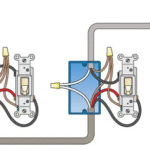
THREE-WAY SWITCH WITH 14/3 ROMEX

Panel ──14/2──► Switch 1 ──14/3──► Switch 2 ──14/2──► Light
              (Source)    (Travelers)  (Load)

14/3 contains:
- Black (hot)
- Red (traveler)
- White (neutral)
- Ground
For complete wiring diagrams, consult:
- NEC handbook
- Licensed electrician
- Manufacturer instructions
Frequently Asked Questions
What does 'Romex' stand for?
Romex is a brand name, not an acronym. It's manufactured by Southwire Company. The technical name is NM-B (Non-Metallic sheathed cable, type B).
Can I use Romex in my garage?
Partially:
- ✅ Concealed in walls/ceilings
- ✅ Above 8 feet (exposed)
- ❌ Below 8 feet (exposed) — use BX or conduit
Is Romex the same as NM-B?
Yes and no:
- Romex is a specific brand of NM-B cable
- NM-B is the technical designation
- Like saying 'Kleenex' vs 'facial tissue'
- All Romex is NM-B; not all NM-B is Romex brand
How long does Romex last?
30-50+ years when properly installed in appropriate locations. Romex from the 1960s-1970s still functions in many homes. Lifespan depends on:
- Installation quality
- Environmental conditions
- Proper sizing
- Protection from damage
Can Romex be used outdoors?
No. Romex is rated for dry locations only. For outdoor use:
- Use conduit with THWN wire
- Use UF (Underground Feeder) cable
- Use weatherproof methods
What's the difference between Romex and THHN wire?
Romex = Complete cable (multiple THHN wires + ground in plastic jacket) THHN = Individual insulated wire (used inside conduit)
Romex contains THHN-type wires pre-assembled in a jacket.
Conclusion
Romex wiring (NM-B cable) is the standard electrical wiring method for residential homes, consisting of insulated wires bundled together in a flexible plastic jacket for easy installation inside walls and ceilings. While 'Romex' is technically a brand name, it has become the common term for all non-metallic sheathed cable used in home electrical systems.
Key takeaways:
- Romex = NM-B cable (brand name vs. technical name)
- Used inside walls/ceilings in dry locations only
- Not for outdoor, wet, or exposed locations (use BX, conduit, or UF cable)
- Completely safe when properly installed per NEC code
- Available in various sizes (14/2, 12/2, 10/2, etc.) for different circuits
- Most economical residential wiring method (faster, cheaper than conduit)
- Not 'illegal' but has specific approved uses
Understanding what Romex is, where it can be used, and how it compares to other wiring methods ensures safe, code-compliant electrical installations in your home.
Related Guides:
- What Does NM-B Stand For? - Technical details on NM-B designation
- What Is BX Cable Used For? - When to use armored cable instead
- What Is Electrical Conduit? - Understanding conduit systems
- Romex Wire Size Chart ← Coming soon
- Can You Run Romex in Conduit? ← Coming soon
Planning electrical work? Always follow local electrical codes, obtain required permits, and consider hiring a licensed electrician for complex installations. Improper electrical work is dangerous and may violate building codes.