
Twin and Earth cable, commonly referred to as T&E cable, is a fundamental type of electrical wiring used extensively in residential and commercial buildings. It's the standard choice for fixed wiring installations in the UK and many other countries, powering everything from lighting circuits to high-current appliances. Its name describes its core components: two current-carrying conductors ('twin') and a single protective conductor ('earth').
what is twin and earth cable
Anatomy of a T&E Cable
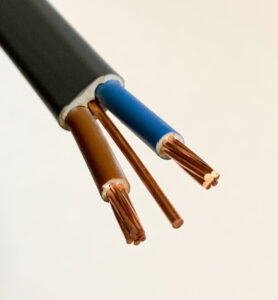
Understanding the composition of a Twin and Earth cable is crucial for safe and correct installation. It's a flat, sheathed cable comprising three main parts:
- Live Conductor (Brown/Red): This is the insulated copper wire that carries the electrical current to the device.
- Neutral Conductor (Blue/Black): This insulated copper wire completes the circuit by carrying the current away from the device.
- Earth Conductor (Bare Copper): This is the uninsulated ground wire. Its purpose is to provide a safety path for fault currents, protecting users from electric shocks.
These three conductors are encased in a durable, flat outer sheath, typically made of PVC (Polyvinyl Chloride) or LSZH (Low Smoke Zero Halogen) material.
Common Applications and Sizing of Twin and Earth Cable
Choosing the correct size of T&E cable is essential for safety and performance. Using an undersized cable can lead to overheating and fire hazards. Here's a breakdown of the most common applications and their corresponding cable sizes:
- 1.0 mm² and 1.5 mm²: Used for lighting circuits.
- 2.5 mm²: The most common size for socket circuits, including ring mains and radial circuits.
- 4.0 mm² and 6.0 mm²: Used for high-power appliances like electric cookers, showers, and heaters.
The Importance of T&E Cable: Key Benefits
- Cost-Effective and Readily Available: Its widespread use makes it an affordable and easy-to-source option for electricians and DIY enthusiasts.
- Ease of Installation: The flat profile of T&E cable makes it simple to clip and route along surfaces, inside conduits, or within walls.
- Compliance with Safety Standards: Twin and Earth cable is manufactured to meet rigorous safety standards (e.g., BS 6004), ensuring it's approved for fixed wiring installations.
Twin and Earth vs. Other Cable Types
Understanding when to use T&E cable versus other options is a key part of electrical safety.
- T&E vs. SWA (Steel Wire Armoured) Cable: T&E is for indoor, fixed wiring, while SWA is designed for outdoor or underground use where mechanical protection is required.
- T&E vs. Flexible Cable: Flexible cables (like those on lamps and appliances) are made to withstand movement. T&E is not suitable for this purpose and should only be used in fixed installations.
How to Safely Install Twin and Earth Cable
While professional installation is always recommended, understanding the process is beneficial.
- Preparation: Ensure the power is off. Use a voltage tester to confirm the circuit is dead.
- Stripping the Outer Sheath: Use a sharp knife or cable strippers to carefully remove the outer PVC sheath, exposing the three conductors.
- Stripping Individual Conductors: Use wire strippers to remove the insulation from the live and neutral conductors, leaving the bare earth wire intact.
- Termination: Connect the wires to the appropriate terminals on the switch, socket, or light fitting. The brown wire goes to the live terminal, the blue wire to the neutral, and the bare copper earth wire to the earth terminal.
The Evolution of T&E: Conductor Colors
It's important to be aware of the color code changes in electrical wiring to ensure safety, especially when working on older properties.
- Newer (post-2004) Wiring:
- Live: Brown
- Neutral: Blue
- Older (pre-2004) Wiring:
- Live: Red
- Neutral: Black
Conclusion
Twin and Earth cable remains a cornerstone of fixed electrical wiring due to its simple, effective design, reliability, and cost-effectiveness. By understanding its composition, applications, and safety standards, you can ensure safe and compliant electrical installations in both new and existing buildings.


