
Your new CNC machine is ready. You install standard cables in the drag chain to save $500. Three weeks later, production stops—cables failed, conductors broken. Emergency replacement costs $8,000 (cable + labor + downtime). You 'saved' $500 but spent $8,000.
Drag chain cables aren't just 'flexible cables'—they're precision-engineered for millions of flex cycles in one of the harshest cable environments. Get the specifications wrong, and failure is guaranteed. Get them right, and your cables outlast the machine.
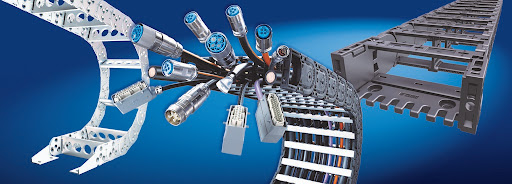
Drag Chain Cable Selection
This guide covers the 10 critical parameters you must specify correctly for drag chain cable selection.
Why Drag Chain Cables Are Different
Standard cable in drag chain:
- Fails in days to weeks
- Conductors break at bend points
- Shield damage causes interference
- Jacket wears through from friction
Proper drag chain cable:
- Lasts 5-10 years (millions of cycles)
- Maintains electrical integrity
- Withstands mechanical stress
- Costs 5-10x more but worth every penny
The 10 parameters that matter:
Parameter 1: Flex Life Rating (Cycles to Failure)
What it is: Number of complete flex cycles the cable can survive before failure.
Understanding Flex Cycles
One flex cycle = one complete movement and return
Example: Drag chain on CNC table
- Start position → Fully extended → Return to start = 1 cycle
Calculate Your Required Cycles
Formula:
Total Cycles = Cycles/min × 60 × Hours/day × Days/year × Years

Example - CNC Machine:
- 30 cycles/minute (table movement)
- 16 hours/day (2 shifts)
- 250 days/year
- 5 year target life

Total = 30 × 60 × 16 × 250 × 5 = 36,000,000 cycles
Flex Life Ratings by Cable Class
| Cable Class | Flex Rating | Application | Cost Factor |
|---|---|---|---|
| Standard flexible | 1,000-10,000 | Occasional movement | 1x |
| Flex-rated | 100,000-500,000 | Regular flexing | 3-5x |
| High-flex | 1M-3M | Continuous motion | 5-8x |
| Ultra high-flex | 3M-7M | High-speed automation | 8-12x |
| Premium drag chain | 7M-10M+ | Critical applications | 12-20x |
Safety Factor
Always add safety margin:
- Calculated cycles × 1.5 = Minimum rating
- Calculated cycles × 2.0 = Recommended rating
- Calculated cycles × 3.0 = Critical applications
Example:
Calculated: 36M cycles
Minimum: 36M × 1.5 = 54M → Need 7M+ rated cable
Recommended: 36M × 2.0 = 72M → Need 10M rated cable
What Kills Flex Life
Factors that reduce cycles:
- Bend radius too small (cuts life by 50-80%)
- Speed too high (accelerates fatigue)
- Improper installation (twisting, tension)
- Temperature extremes (material fatigue)
- Chemical exposure (weakens materials)
Real example:
- Cable rated: 5M cycles @ 10x diameter bend radius
- Installed at: 7x diameter (20% undersized)
- Actual life: ~1M cycles (80% reduction)
Specification Guide
For your specification sheet, state:
- 'Minimum flex life: 10 million cycles'
- 'Tested per manufacturer standard at [bend radius]'
- 'Certificate of testing required'
Parameter 2: Bend Radius (The Most Critical Factor)
What it is: Minimum radius the cable can bend without damage or reduced life.
Why It's Critical
Bend radius directly determines:
- Flex life (smaller radius = shorter life)
- Stress on conductors (tight bends break wires)
- Shield integrity (foil shields fail on tight bends)
- Overall cable lifespan
Rule of thumb:
Minimum bend radius = 10 × Cable outer diameter

Example:
Cable OD = 15mm
Minimum bend radius = 10 × 15mm = 150mm
Bend Radius Classes
Standard cables: 6-8x diameter
- Not for drag chains
- Will fail quickly
Drag chain cables: 10-15x diameter
- General drag chain use
- Millions of cycles
Premium drag chain: 7.5-10x diameter
- Smaller radius capable
- Specialized construction
- More expensive
Matching Cable to Chain
Cable carrier inner radius must equal or exceed cable minimum bend radius
Example calculation:
Cable: 12mm OD, 10x minimum = 120mm radius
Chain options:
- 100mm radius → TOO SMALL, cable will fail
- 150mm radius → OK, adequate margin
- 200mm radius → BEST, extra safety margin
Multiple Cables in Same Chain
When bundling cables:
- Largest cable determines minimum radius
- All cables must be rated for that radius
- Mixing standard and drag chain = disaster
Example:
Cable A: 10mm OD, 100mm min radius
Cable B: 15mm OD, 150mm min radius
Cable C: 8mm OD, 80mm min radius

Chain requirement: 150mm minimum (Cable B)
All cables must handle 150mm radius OK
What Happens with Wrong Radius
Radius too small:
- Week 1-2: Appears fine
- Week 3-4: Intermittent faults begin
- Week 5-8: Complete failure
Failure mode:
- Conductors break at bend point
- Shield cracks or breaks
- Insulation stress cracks
- Jacket wears through
Specification Guide
State clearly:
- 'Minimum bend radius: 120mm'
- 'Cable must be rated for continuous flexing at this radius'
- 'Provide test data for specified radius'
Parameter 3: Conductor Construction (Stranding Class)
What it is: How the conductor is constructed—number and size of individual wire strands.
Why It Matters
Conductor construction determines:
- Flexibility (more strands = more flexible)
- Flex life (fine strands survive more cycles)
- Cost (ultra-fine stranding is expensive)
- Electrical resistance (slightly higher with fine strands)
Stranding Classes (IEC 60228 / DIN VDE 0295)
Class 1 (Solid):
- Construction: Single wire
- Flexibility: None
- Flex life: <100 cycles
- Use: NEVER in drag chains
Class 2 (Stranded):
- Construction: 7-19 strands
- Flexibility: Limited
- Flex life: 1,000-5,000 cycles
- Use: NOT for drag chains
Class 5 (Flexible):
- Construction: 50-150 fine strands
- Flexibility: Good
- Flex life: 100,000-500,000 cycles
- Use: Light-duty drag chains only
Class 6 (Extra-flexible):
- Construction: 150-500 ultra-fine strands
- Flexibility: Excellent
- Flex life: 1M-5M cycles
- Use: Standard drag chain cables
Class 7 (Ultra-flexible, custom):
- Construction: 500-2,000+ micro strands
- Flexibility: Extreme
- Flex life: 5M-10M+ cycles
- Use: Premium/high-speed drag chains
Conductor Lay (Wire Arrangement)
Parallel lay:
- Strands laid straight
- Basic construction
- Lower cost
Concentric lay:
- Strands in layers
- Better flexibility
- Moderate cost
Rope lay (bunched):
- Multiple bundles twisted together
- Best flexibility
- Prevents strand breakage
- Highest cost
- Required for drag chains
Example Specifications
2.5mm² conductor for drag chain:
Wrong spec:
- '2.5mm² copper conductor'
- Could be Class 2 (will fail)
Correct spec:
- '2.5mm² copper conductor, Class 6 minimum'
- 'Rope lay or bunched construction'
- 'Minimum 200 strands per conductor'
Cross-Sectional Area vs AWG
Metric (mm²):
- Common in Europe, Asia
- 0.5, 0.75, 1.0, 1.5, 2.5, 4, 6, 10, 16 mm²
AWG (American Wire Gauge):
- Common in North America
- 24, 22, 20, 18, 16, 14, 12, 10, 8 AWG
Conversion example:
- 1.0 mm² ≈ 18 AWG
- 2.5 mm² ≈ 14 AWG
- 6.0 mm² ≈ 10 AWG
Specification Guide
Always specify:
- 'Conductor: [size] copper, Class 6 minimum'
- 'Rope lay construction required'
- 'Minimum [number] strands per conductor'
Parameter 4: Number of Conductors and Configuration
What it is: How many conductors and how they're arranged in the cable.
Common Configurations
Power cables:
- 3-conductor (3-phase, no ground)
- 4-conductor (3-phase + ground)
- 5-conductor (3-phase + neutral + ground)
Control/signal cables:
- 2-core (signal + return)
- 4-core (2 pairs)
- 8, 12, 16, 24-core (multiple signals)
Hybrid cables:
- Power + signal combined
- Power + data network
- Power + signal + pneumatic (integrated)
Conductor Arrangement Matters
Round bundle (concentric):
- All conductors in circular arrangement
- Symmetrical stress distribution
- Best for power cables
- Standard for drag chains
Layered construction:
- Inner layer: Small signals
- Outer layer: Power conductors
- Good separation
- Reduces interference
Twisted pairs:
- Signal conductors twisted together
- Reduces noise/interference
- Essential for data/encoder cables
- Must specify pair count
Color Coding
Power conductors (IEC):
- Phase 1: Brown
- Phase 2: Black
- Phase 3: Gray
- Neutral: Blue
- Ground: Green/Yellow
Control conductors:
- Numbered: 1, 2, 3, 4... (most flexible)
- Color coded: Various schemes
- Important: Specify in order sheet
Conductor Grouping
For hybrid cables, specify groups:
Example: Robot cable
- Group 1: Power (3 × 2.5mm²)
- Group 2: Brake (2 × 1.0mm²)
- Group 3: Encoder (4 pairs × 0.34mm²)
- Group 4: I/O (8 × 0.5mm²)
Proper grouping:
- Keeps related signals together
- Reduces crosstalk
- Easier termination
- Better cable management
Special Considerations
Shielded pairs:
- Each pair individually shielded
- Or overall shield for all
- Or both (maximum protection)
Drain wires:
- For foil shields (can't terminate foil directly)
- Usually 24-20 AWG
- One per shield
Filler cores:
- Non-conductive strings to maintain shape
- Help cable stay round
- Reduce internal friction
Specification Example
Poor spec:
- '24 conductor cable'
Good spec:
- '24 conductor cable configured as:'
- '12 twisted pairs (individually numbered 1-1, 1-2... 12-1, 12-2)'
- 'Overall foil + braid shield'
- 'Drain wire 22 AWG'
Parameter 5: Shielding Type and Coverage
What it is: Conductive layer(s) protecting signal integrity from electromagnetic interference.
Why Shielding Matters in Drag Chains
Drag chain environment is EMI hell:
- Motors and VFDs nearby (low-frequency noise)
- Switching power supplies (mid-frequency)
- Digital signals (high-frequency)
- Multiple cables in same chain (crosstalk)
Without proper shielding:
- Encoder errors (position loss)
- Sensor noise (false readings)
- Communication errors (network dropouts)
- Motor control issues (jitter, instability)
Shielding Types for Drag Chains
Aluminum Foil:
- Coverage: 100%
- Effectiveness: 60-85 dB (high frequency)
- Flex life: POOR (breaks quickly)
- Cost: Low
- Use: Fixed installations ONLY
- Never use in drag chains
Copper Braid:
- Coverage: 70-95% (depends on density)
- Effectiveness: 50-80 dB (low-medium frequency)
- Flex life: GOOD (10K-100K cycles)
- Cost: Moderate
- Use: Light-duty drag chains
Spiral/Served Shield:
- Coverage: 60-85%
- Effectiveness: 40-70 dB
- Flex life: EXCELLENT (1M-10M cycles)
- Cost: High
- Use: Standard drag chain cables
Foil + Braid (Combination):
- Coverage: 100% (foil) + strength (braid)
- Effectiveness: 85-100 dB
- Flex life: MODERATE (foil limits)
- Cost: High
- Use: Fixed or light-flex only
Foil + Spiral (Combination):
- Coverage: 100% + flex capability
- Effectiveness: 70-90 dB
- Flex life: EXCELLENT
- Cost: Very high
- Use: High-EMI drag chain applications
Shield Configuration Options
Overall shield:
- One shield around all conductors
- Simplest, lowest cost
- Adequate for power cables
Individual pair shields:
- Each twisted pair has own shield
- Best noise immunity
- Essential for encoders, high-speed data
- More expensive
Both individual + overall:
- Maximum protection
- Critical applications
- Expensive
Shield Coverage Percentage
For braided shields:
- 70% coverage: Basic, adequate for moderate EMI
- 85% coverage: Good, most applications
- 90%+ coverage: Excellent, high EMI environments
Calculate coverage based on EMI severity in your application
Shield Termination in Drag Chains
Critical rules:
- Both ends must be grounded (for drag chains)
- Use 360-degree termination (not pigtail)
- Spiral shields maintain continuity during flexing
- Check continuity after installation
Specification Guide
Poor spec:
- 'Shielded cable'
Good spec:
- 'Spiral copper shield, 85% minimum coverage'
- 'Individual shields per pair, plus overall spiral shield'
- 'Drain wire 22 AWG included'
- 'Shield continuity maintained during flexing'
Parameter 6: Insulation and Jacket Materials
What it is: Materials surrounding conductors (insulation) and outer protective layer (jacket).
Insulation Materials
PVC (Polyvinyl Chloride):
- Temperature: -10 to +70°C
- Flexibility: Poor to moderate
- Flex life: Limited
- Cost: Low
- Drag chain use: NO (too stiff)
TPE (Thermoplastic Elastomer):
- Temperature: -40 to +90°C
- Flexibility: Excellent
- Flex life: Good (1M-3M cycles)
- Cost: Moderate
- Drag chain use: YES (common choice)
Special Flexible PVC:
- Temperature: -20 to +80°C
- Flexibility: Good
- Flex life: Moderate (500K-1M cycles)
- Cost: Low-moderate
- Drag chain use: Light-duty only
XLPE (Cross-linked Polyethylene):
- Temperature: -40 to +90°C
- Flexibility: Good
- Flex life: Good
- Cost: Moderate
- Drag chain use: Power cables, less common
Jacket Materials
PVC:
- Not suitable (too stiff, cracks)
- Never use for drag chains
PUR (Polyurethane):
- Temperature: -40 to +80°C
- Abrasion: EXCELLENT
- Oil resistance: EXCELLENT
- UV resistance: Good
- Flex life: Excellent (3M-7M cycles)
- Cost: High
- Drag chain use: BEST CHOICE
- Warning: Can hydrolyze in hot/humid
TPE:
- Temperature: -40 to +90°C
- Abrasion: Very good
- Oil resistance: Good
- Flexibility: Excellent
- Flex life: Good (1M-5M cycles)
- Cost: Moderate
- Drag chain use: GOOD ALTERNATIVE
Neoprene:
- Temperature: -40 to +90°C
- Abrasion: Excellent
- Oil/chemical: Excellent
- Flex life: Very good
- Cost: High
- Drag chain use: Harsh environments
Filler Materials
Why fillers matter:
- Fill voids between conductors
- Maintain round shape
- Reduce internal friction
- Extend flex life
Common fillers:
- Talc powder: Most common, reduces friction
- PP strings: Polypropylene filler strands
- Fleece: Textile wrapping
- Paper: Budget option (less effective)
Best for drag chains: Talc-filled
Temperature Considerations
Cold environments (<0°C):
- PVC stiffens, unusable
- TPE stays flexible
- PUR excellent
- Critical for winter installations
Hot environments (>50°C):
- Verify conductor temperature rating
- Account for ambient + I²R heating
- 90°C conductor rating minimum
Temperature cycling:
- Drag chains often see wide swings
- -20°C to +60°C common
- Material must handle range
Specification Guide
Poor spec:
- 'PVC insulation, PVC jacket'
Good spec:
- 'Conductor insulation: TPE, temperature rated -40 to +90°C'
- 'Outer jacket: PUR, oil and abrasion resistant'
- 'Talc powder filler for reduced friction'
- 'Overall construction rated for 5M cycles minimum'
Parameter 7: Cable Outer Diameter
What it is: Total diameter of the finished cable including jacket.
Why Diameter Matters
Drag chain sizing:
- Cable must fit in chain with room to move
- Too tight = binding, premature failure
- Proper fit = long life
Bend radius:
- Larger diameter = larger minimum radius
- Affects chain size selection
Weight:
- Larger = heavier
- Affects unsupported span length
- Influences carrier selection
Diameter vs Conductor Count
Approximate outer diameters:
| Conductors | Size | Typical OD | Bend Radius (10x) |
|---|---|---|---|
| 4-core | 1.5mm² | 8-10mm | 80-100mm |
| 4-core | 2.5mm² | 10-12mm | 100-120mm |
| 12-core | 0.75mm² | 10-12mm | 100-120mm |
| 18-core | 1.0mm² | 14-16mm | 140-160mm |
| 4-core power | 6mm² | 16-20mm | 160-200mm |
Note: Actual diameter varies by construction and manufacturer
Drag Chain Fill Capacity
Critical rule: 50-60% maximum fill
Calculation:
Chain inner area = Width × Height
Example: 50mm × 30mm = 1,500 mm²

Maximum fill: 1,500 × 0.60 = 900 mm²

Cable areas (use actual OD):
Cable 1: OD 10mm → Area = π × 5² = 79 mm²
Cable 2: OD 15mm → Area = π × 7.5² = 177 mm²
Cable 3: OD 8mm → Area = π × 4² = 50 mm²

Total: 79 + 177 + 50 = 306 mm²

Fill percentage: 306 ÷ 1,500 = 20% ✓ OK
Overfilling causes:
- Cables can't move freely
- Increased friction and wear
- Binding and stacking
- Premature failure
Weight per Meter
Typical weights:
- Small control (4×0.75mm²): 60-80 g/m
- Medium control (12×1.0mm²): 150-200 g/m
- Power (4×2.5mm²): 200-300 g/m
- Heavy power (4×10mm²): 800-1,200 g/m
Weight affects:
- Unsupported span capability
- Carrier motor sizing (for powered carriers)
- Installation difficulty
Specification Tips
Always request:
- 'Provide actual outer diameter ± tolerance'
- 'Confirm cable fits in [chain size] with adequate clearance'
- 'Weight per meter for carrier sizing'
Verify before ordering:
- Calculate total cable area
- Confirm against chain inner dimensions
- Leave 40-50% free space
Parameter 8: Travel Distance and Speed
What it is: How far and how fast the cable moves in the drag chain.
Travel Distance (Stroke Length)
Affects:
- Required cable length
- Unsupported span length
- Carrier design (E-chain vs. festoon vs. reel)
Cable length calculation:
Total cable length = Fixed + Moving + Bend allowance

Fixed section: From fixed point to chain entry
Moving section: Chain travel distance
Bend allowances: 1.5 × (π × bend radius) per end

Example:
Fixed: 5m
Travel: 10m
Bend radius: 0.15m
Bends: 2 (entry and exit)

Bend allowance: 1.5 × (π × 0.15) × 2 = 1.41m

Total: 5 + 10 + 1.41 = 16.41m → Order 17m
Unsupported Span
What it is: Cable section that hangs freely during travel
Critical factor: Weight creates sag and tension
General guidelines:
- Light cables (<100g/m): 1-2m span OK
- Medium cables (100-300g/m): 0.5-1m span
- Heavy cables (>300g/m): 0.3-0.5m span
- High-flex cables: Can handle longer spans
Exceeding span limits causes:
- Excessive tension on cable
- Accelerated fatigue
- Potential connector pull-out
- Premature failure
Solution for long travel:
- Use supported carrier (e-chain) for entire length
- Or reduce cable weight (smaller conductors, fewer cores)
- Or use cable trolley system
Travel Speed
Affects:
- Dynamic stress on cable
- Heat generation in chain
- Acceleration forces
- Flex life
Speed ratings:
- Standard flex cable: Up to 3 m/s
- High-flex cable: Up to 5 m/s
- Ultra high-flex: Up to 10 m/s
Speed example:
CNC table: 10m travel in 30 seconds
Average speed: 10m ÷ 30s = 0.33 m/s ✓ OK for standard

High-speed pick-and-place: 3m in 1 second
Average speed: 3m ÷ 1s = 3 m/s → Need high-flex rated
Acceleration
Rapid starts/stops create additional stress:
- Acceleration forces added to cable weight
- Can be 2-5x static weight
- Especially critical for long unsupported spans
High acceleration applications need:
- Shorter unsupported spans
- Higher flex rating cable
- Proper strain relief
Specification Guide
Provide to supplier:
- 'Travel distance: 8 meters'
- 'Travel speed: Maximum 2 m/s'
- 'Acceleration: Moderate (3-5 seconds to max speed)'
- 'Unsupported span: 0.8 meters maximum'
Supplier should confirm:
- Cable suitable for specified speed
- Recommended carrier type and size
- Proper installation for your application
Parameter 9: Environmental Conditions
What it is: Operating environment the cable will face in service.
Temperature Range
Specify both:
- Operating temperature: -20 to +60°C (actual cable temp)
- Ambient temperature: -10 to +40°C (air around cable)
- Installation temperature: Minimum -20°C (for cold climate installs)
Common ranges:
- Indoor, climate controlled: +10 to +40°C
- Industrial indoor: -5 to +50°C
- Outdoor/extreme: -40 to +80°C
Account for heat sources:
- Near motors, drives: +20°C above ambient
- Direct sunlight: +30°C above ambient
- Enclosed carriers: +10-15°C above ambient
Chemical Exposure
Common chemicals in industrial environments:
- Cutting oils: PUR jacket required
- Coolant: PUR or neoprene
- Solvents: Check compatibility chart
- Hydraulic fluid: PUR excellent
- Acids/alkalis: Special jacket needed
If chemical exposure possible:
- Specify exact chemicals
- Request compatibility confirmation
- Consider additional protective measures
Moisture and Water
Conditions:
- Dry environment: Standard construction OK
- Occasional splash: Standard outdoor jacket
- Frequent wet: Water-resistant jacket
- Continuous wet: May need IP67 construction
Indoor drag chains:
- Usually dry
- Condensation possible in cold buildings
- Standard jacket adequate
Outdoor or washdown:
- Need robust water resistance
- May require sealed connectors
- Consider stainless chain
UV Exposure (if applicable)
For outdoor drag chains:
- UV-resistant jacket required (usually black with carbon black)
- Or provide shading/cover for chain
- Check jacket UV rating
Abrasion and Mechanical
Drag chain environment:
- Cables rub against each other
- Contact with chain links
- Potential for impact from debris
Jacket hardness matters:
- Too soft: Wears quickly
- Too hard: Cracks with flexing
- PUR provides best balance
If severe abrasion:
- Premium abrasion-resistant jacket
- Larger cable separates (less contact)
- Regular inspection intervals
Cleanliness Requirements
Clean room environments:
- Low particle generation required
- Smooth jacket surface
- Often white or light colored
- Special certifications may be needed
Food processing:
- FDA-compliant materials
- Easy to clean surface
- May need special approval
Standard industrial:
- No special requirements
- Focus on durability
Specification Example
Include environmental section:
- 'Operating temperature: -20 to +60°C continuous'
- 'Occasional exposure to water-based cutting coolant'
- 'Moderate abrasion environment'
- 'Indoor installation, no UV exposure'
- 'No special cleanliness requirements'
Parameter 10: Certifications and Standards
What it is: Required approvals, testing, and compliance documentation.
Geographic Certifications
North America:
- UL (Underwriters Laboratories): Required for most installations
- CSA (Canadian Standards): Required in Canada
- Type TC-ER: Tray cable, extra rugged (common for industrial)
- NFPA 79: For industrial machinery
Europe:
- CE marking: Mandatory for commercial products
- IEC standards: International specifications
- Low Voltage Directive: For electrical safety
- RoHS compliance: Restriction of hazardous substances
- REACH: Chemical regulations
China:
- CCC (China Compulsory Certificate): Required for many products
- GB standards: Chinese national standards
International:
- ISO 9001: Quality management
- ISO 14001: Environmental management
Industry-Specific Standards
Machine tools:
- DIN VDE 0250: German cable standards
- VDE 0298: Installation standards
Robotics:
- Robot cable certifications: Manufacturer-specific testing
- Multi-million cycle test results: Required
Food processing:
- FDA CFR Title 21: Food contact materials
- USDA acceptance: May be required
Marine:
- DNV, ABS, Lloyd's: Marine classification societies
- IEC 60092: Marine cable standards
Fire and Flame Ratings
For enclosed spaces:
- IEC 60332-1: Single cable vertical flame test
- IEC 60332-3: Bundled cable flame propagation
- LSZH (Low Smoke Zero Halogen): Required in many public/transport applications
North American:
- UL 1581 VW-1: Vertical wire flame test
- FT1/FT2: Canadian flame tests
- FT4: Severe fire test
Mechanical Testing
Request test certificates for:
- Flex cycle testing (actual cycles achieved)
- Bend radius capability
- Abrasion resistance (cycles to failure)
- Tensile strength
- Torsion testing (if applicable)
Environmental Testing
May be required:
- Temperature cycling (-40 to +80°C)
- Cold bend test (flexibility at low temp)
- Oil resistance (immersion test)
- UV exposure (for outdoor)
- Salt spray (for marine/coastal)
Documentation Requirements
What to request:
- Full specification data sheet
- Certification documents (UL, CE, etc.)
- Test reports (flex life, etc.)
- Material declarations (RoHS, REACH)
- Installation instructions
- Warranty information
For critical applications:
- Batch/lot traceability
- Quality inspection reports
- Certificate of conformance
Specification Guide
State clearly:
- 'UL and CSA listed required'
- 'CE marking with DoC (Declaration of Conformity)'
- 'Provide flex cycle test certificate showing minimum 5M cycles'
- 'RoHS and REACH compliant'
- 'Full material declaration required'
Putting It All Together: Complete Specification Example
Sample Specification: CNC Machine Drag Chain Cable
Application: CNC machining center, X-axis travel
Parameter 1 - Flex Life:
- Minimum 5 million cycles tested and certified
Parameter 2 - Bend Radius:
- Maximum 120mm minimum bend radius
- Cable suitable for 150mm radius carrier
Parameter 3 - Conductor Construction:
- 4 conductors: 3 × 2.5mm² + 1 × 1.5mm² ground
- Class 6 stranding minimum (150+ strands)
- Rope lay construction
Parameter 4 - Configuration:
- 3 power conductors (brown, black, gray) + 1 ground (green/yellow)
- Round concentric arrangement
Parameter 5 - Shielding:
- Overall spiral copper shield, 85% coverage minimum
- Drain wire 22 AWG included
Parameter 6 - Materials:
- Insulation: TPE, rated -40 to +90°C
- Jacket: PUR, oil and abrasion resistant
- Talc-filled for reduced friction
Parameter 7 - Outer Diameter:
- Approximately 12mm OD (confirm actual)
- Weight: <250g/m
Parameter 8 - Travel:
- Travel distance: 2.5 meters
- Speed: Up to 3 m/s
- Unsupported span: 0.8 meters
Parameter 9 - Environment:
- Temperature: -10 to +60°C operating
- Occasional water-based coolant exposure
- Indoor, moderate abrasion
Parameter 10 - Certifications:
- UL and CSA listed
- CE marking
- Flex cycle test certificate required
Additional:
- Quantity: 50 meters continuous length
- Delivery: Within 4 weeks
- Quote to include shipping
Quick Selection Checklist
Before ordering drag chain cable, verify:
☐ Parameter 1: Flex Life
- [ ] Calculated total lifetime cycles
- [ ] Applied 1.5-2x safety factor
- [ ] Selected cable with adequate rating
- [ ] Requested test certificate
☐ Parameter 2: Bend Radius
- [ ] Calculated minimum (10x diameter)
- [ ] Verified chain radius matches or exceeds
- [ ] Confirmed all cables in chain compatible
- [ ] Documented for installation
☐ Parameter 3: Conductor Construction
- [ ] Specified Class 6 minimum stranding
- [ ] Requested rope lay construction
- [ ] Confirmed strand count adequate
- [ ] Verified conductor size for current
☐ Parameter 4: Configuration
- [ ] Listed all conductors needed
- [ ] Specified arrangement (pairs, groups)
- [ ] Defined color coding
- [ ] Accounted for drain wires
☐ Parameter 5: Shielding
- [ ] Determined if shielding needed
- [ ] Specified spiral shield for flex
- [ ] Defined coverage percentage
- [ ] Planned termination method
☐ Parameter 6: Materials
- [ ] Selected TPE or special PVC insulation
- [ ] Specified PUR or TPE jacket
- [ ] Confirmed temperature range
- [ ] Requested talc filling
☐ Parameter 7: Diameter
- [ ] Obtained actual OD from supplier
- [ ] Calculated chain fill percentage (<60%)
- [ ] Verified weight acceptable
- [ ] Confirmed fits in chain
☐ Parameter 8: Travel & Speed
- [ ] Calculated cable length needed
- [ ] Checked speed vs. cable rating
- [ ] Verified unsupported span
- [ ] Planned for acceleration forces
☐ Parameter 9: Environment
- [ ] Documented temperature range
- [ ] Identified chemical exposures
- [ ] Assessed moisture conditions
- [ ] Noted abrasion severity
☐ Parameter 10: Certifications
- [ ] Listed required approvals (UL, CE, etc.)
- [ ] Requested test certificates
- [ ] Confirmed standards compliance
- [ ] Obtained documentation
Common Specification Mistakes
Mistake 1: 'Flexible Cable' Without Class
Wrong: '4-conductor flexible cable, 2.5mm²' Problem: Could be Class 2 (will fail quickly) Right: '4-conductor, Class 6 stranding, rope lay, 2.5mm²'
Mistake 2: Missing Bend Radius
Wrong: 'Cable for drag chain application' Problem: Supplier may provide inadequate rating Right: 'Cable rated for continuous flexing at 120mm bend radius'
Mistake 3: No Flex Life Specification
Wrong: 'Drag chain rated cable' Problem: Could be 100K cycles (inadequate for many applications) Right: 'Minimum 5 million flex cycles, test certificate required'
Mistake 4: Generic Material Spec
Wrong: 'PVC cable' Problem: PVC too stiff for drag chains Right: 'TPE insulation, PUR jacket, talc-filled'
Mistake 5: Ignoring Certifications
Wrong: No certification mentioned Problem: May not meet local codes, fail inspection Right: 'UL and CSA listed required, CE marking'
Mistake 6: No Environmental Info
Wrong: Only electrical specs provided Problem: Cable may not survive actual conditions Right: 'Operating temp -10 to +60°C, coolant exposure, moderate abrasion'
Cost vs Performance Trade-offs
When to Spend More
Invest in premium cable when:
- ✅ High cycle count (>2M cycles)
- ✅ Critical application (downtime >$1,000/hour)
- ✅ Difficult replacement (embedded in machine)
- ✅ Harsh environment (chemicals, temperature extremes)
- ✅ High speed (>3 m/s)
Premium features worth paying for:
- Class 6 or 7 stranding (not just Class 5)
- Spiral shielding (not braid)
- PUR jacket (not TPE or PVC)
- 7M+ cycle rating (not just 1M)
- Comprehensive testing certification
When Standard Is Adequate
Save money with standard flex cable when:
- ✅ Low cycle count (<500K cycles)
- ✅ Low speed (<1 m/s)
- ✅ Protected environment (indoor, clean)
- ✅ Easy replacement access
- ✅ Light-duty application
Acceptable compromises:
- Class 5 stranding (vs Class 6)
- TPE jacket (vs PUR)
- 1M cycle rating (vs 5M)
- Standard shield (vs premium)
Cost Examples
4-conductor, 2.5mm² drag chain cable, 50m:
| Specification | Cost/m | Total (50m) | Flex Life | Applications |
|---|---|---|---|---|
| Basic flexible (Class 5, TPE) | $6 | $300 | 500K-1M | Light duty, low cycles |
| Standard drag chain (Class 6, PUR) | $12 | $600 | 2M-5M | General industrial |
| Premium drag chain (Class 6, PUR, certified) | $20 | $1,000 | 5M-7M | High-speed, critical |
| Ultra premium (Class 7, special) | $35 | $1,750 | 10M+ | Extreme applications |
ROI calculation example:
Application: 3M cycles needed over 5 years
Downtime cost: $2,000/hour
Replacement time: 4 hours

Standard cable ($300):
Expected life: 1M cycles → 3 failures over 5 years
Replacement cost: 3 × ($300 + $8,000 downtime) = $24,900
Total: $300 + $24,900 = $25,200

Premium cable ($1,000):
Expected life: 5M cycles → 0 failures over 5 years
Total: $1,000

Savings: $24,200 (24x ROI on premium cable)
Installation Best Practices
Even the best cable fails if installed incorrectly.
Critical Installation Rules
1. Never exceed minimum bend radius
- Measure actual radius, don't guess
- Account for multiple bends
- Leave margin for error
2. Maintain proper chain fill
- Calculate all cable areas
- Keep below 60% fill
- Use dividers to separate power and signal
3. Secure both ends properly
- Use proper strain relief
- No tension on cable during movement
- Allow slight slack (cable should form gentle curve)
4. Route cables correctly
- Largest/stiffest cables on outside of bend
- Smallest cables in middle
- Separate power from signals if possible
5. Test after installation
- Run full travel several times
- Check for binding or stacking
- Verify electrical continuity
- Inspect for stress points
What Shortens Cable Life
Installation errors:
- Bend radius too small (cuts life 50-80%)
- Overfilled carrier (binding and friction)
- Twisted during installation (stress concentration)
- Tension on cable (pulls at terminations)
Operating issues:
- Speed exceeds rating (accelerated fatigue)
- Temperature extremes (material degradation)
- Chemical attack (jacket failure)
- Contamination (chips, debris cause abrasion)
Maintenance neglect:
- No inspection schedule
- Ignoring early warning signs
- Running to complete failure
- No cleaning of carrier
Inspection and Maintenance
Quarterly inspection:
- Visual check for jacket damage
- Look for kinking or twisting
- Check connectors for looseness
- Clean debris from carrier
Annual inspection:
- Run cable through full travel while observing
- Check electrical continuity on all conductors
- Test insulation resistance
- Inspect carrier wear
Replace when:
- Jacket cracking or splitting visible
- Conductor exposure
- Intermittent electrical faults
- Visible deformation or kinking
The Bottom Line
Drag chain cable selection requires specifying 10 critical parameters:
- Flex life rating → Match to calculated cycles × 1.5-2 safety factor
- Bend radius → Minimum 10x diameter, match to carrier
- Conductor construction → Class 6 rope lay minimum
- Configuration → Proper arrangement and count
- Shielding → Spiral shield for EMI environments
- Materials → TPE/PUR, talc-filled
- Diameter → Verify fits in carrier with <60% fill
- Travel & speed → Match rating to application
- Environment → Temperature, chemicals, abrasion
- Certifications → UL/CE and test certificates
Critical rules:
✅ Always calculate flex cycles - Don't guess
✅ Verify bend radius - Measure actual carrier
✅ Specify Class 6 minimum - Class 5 often inadequate
✅ Use PUR jacket - Best abrasion and flex
✅ Test certificates required - Verify claims
✅ Plan for environment - Account for real conditions
❌ Never use standard cable - Will fail quickly
❌ Never guess at specifications - Measure and calculate
❌ Never skip certifications - May not meet code
❌ Never overfill carrier - Causes binding
❌ Never exceed bend radius - Kills cable life
Investment in proper drag chain cables:
- Initial cost: 5-10x standard cable
- Lifespan: 5-10 years vs weeks/months
- Total cost: 80-95% savings vs. repeated failures
Your specification must include all 10 parameters. Missing even one leads to wrong cable selection and premature failure.
Now you know exactly what to specify for drag chain cables that last their designed lifetime.


