
A dead car battery can leave you stranded—but with a pair of jumper cables and a second vehicle, you can get back on the road in minutes. Whether you're facing a cold morning or an old battery, here's a simple, safe guide on how to use jumper cables properly.
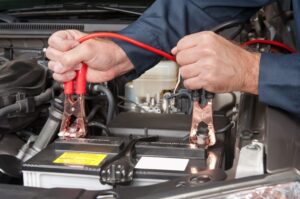
How to Use Jumper Cables
🧰 What You’ll Need
-
Jumper cables (at least 10–12 feet, heavy-duty preferred)
-
A second vehicle with a fully charged battery
-
A flat, safe place to park both vehicles
-
Optional: gloves and eye protection
⚠️ Safety First: Important Warnings
-
Make sure both vehicles are turned off
-
Keep metal objects away from battery terminals
-
Never touch the cable clamps together when they are connected to a battery
-
Read your car's manual — some vehicles have specific jump-starting procedures
🚗 Step-by-Step: How to Use Jumper Cables
Step 1: Position the Vehicles
Park the working vehicle nose-to-nose (or side-by-side) with the dead car so the jumper cables can reach.
Turn off both engines, and put both cars in Park (P) or Neutral (N) with the parking brakes on.
Step 2: Identify Battery Terminals
Open the hoods and find the batteries.
Each battery has:
-
Positive terminal (+) — often red
-
Negative terminal (−) — often black
Step 3: Connect the Jumper Cables (Order Matters!)
-
Red clamp to dead battery (+)
-
Red clamp to good battery (+)
-
Black clamp to good battery (−)
-
Black clamp to an unpainted metal surface on the dead car (like a bolt on the engine block — not the battery)
✅ This reduces the risk of sparks and battery explosion.
Step 4: Start the Working Car
Let the working car run for 1–2 minutes to send power to the dead battery.
Step 5: Start the Dead Car
Try starting the car with the dead battery. If it doesn’t start, wait another minute and try again.
Step 6: Remove the Cables (Reverse Order)
-
Black clamp from engine block
-
Black clamp from good battery (−)
-
Red clamp from good battery (+)
-
Red clamp from dead battery (+)
⚠️ Do not let the clamps touch each other during removal.
Step 7: Let the Jumped Car Run
Let the revived car idle for 15–30 minutes or drive it for a while to recharge the battery.
🛠️ Troubleshooting: If It Still Won’t Start
-
Check if the cable clamps are secure and connected to clean metal
-
Make sure you’re following the connection order
-
If it still doesn’t work, your battery might be too far gone, or there may be another issue (like a faulty alternator)
💡 Pro Tips
-
Invest in heavy-gauge jumper cables (4 to 6 gauge for better power transfer)
-
Keep cables stored in a pouch in your trunk
-
Consider a portable jump starter for emergencies when no other vehicle is nearby
❓ FAQ
Q: Can jumper cables damage my car?
A: Not if used correctly. Improper connection or reversed polarity can cause electrical damage.
Q: Can I jump-start a car in the rain?
A: Yes, if you avoid touching metal and follow the steps carefully.
Q: Do hybrid or electric vehicles need special care?
A: Yes — always refer to the vehicle’s manual. Many EVs can't be jump-started in the traditional way.
✅ Summary Checklist
-
✅ Park safely
-
✅ Turn off both vehicles
-
✅ Connect cables in the correct order
-
✅ Start the working car, then the dead car
-
✅ Remove cables in reverse order
-
✅ Let the car run to recharge


1 comment
OKX 08/19/2025
Hello, its good paragraph regarding media print, we all be aware of media is a great source of data.