
If you're installing a new dryer or moving into an older home, you may encounter a 3-prong dryer outlet. While newer homes often have 4-prong outlets (to separate ground and neutral), many still use 3-prong connections. In this guide, we’ll show you how to safely connect a 3-prong dryer cord to your dryer, step by step.
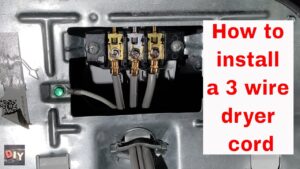
how to connect 3 prong dryer cord
🔧 What You’ll Need
-
A 3-prong dryer cord
-
A screwdriver (usually Phillips or flathead)
-
A nut driver or socket wrench
-
The dryer’s user manual (recommended)
-
Safety gloves (optional, but advised)
⚠️ Safety First
Unplug the dryer and make sure it’s not connected to any power source before you begin.
Electric dryers run on 240 volts — enough to cause serious harm.
🧰 Step-by-Step: How to Install a 3-Prong Dryer Cord
Step 1: Locate the Dryer Terminal Block
-
On the back of your dryer, look for a small metal plate (often held by a screw).
-
Remove the cover to expose the terminal block — usually three posts in a row.
Step 2: Remove the Old Cord (if applicable)
-
If a 4-prong cord is attached, remove it by unscrewing each terminal connection and detaching the strain relief clamp.
Step 3: Connect the 3-Prong Cord
The three wires on your 3-prong cord are:
-
Center wire (neutral) – white or center post
-
Left and right wires (hot) – usually black and red
⚙️ Wire It Like This:
-
Attach the center (neutral) wire of the cord to the center terminal.
-
Attach the left and right (hot) wires to the outer terminals.
-
Use the screws to secure each connection tightly.
🛑 IMPORTANT: If your dryer has a green or bare ground wire connected to the chassis, it must be bonded to the neutral terminal in a 3-prong setup. This is typically done by a green ground screw or bonding strap. Check your dryer's manual.
Step 4: Secure the Strain Relief Clamp
-
Feed the cord through the cord access hole at the bottom.
-
Use a strain relief clamp to prevent the cord from pulling or shifting. Tighten the clamp screws firmly.
Step 5: Replace the Cover and Test
-
Reattach the metal cover plate.
-
Plug in the dryer and test for proper operation.
🧠 FAQs About 3-Prong Dryer Cords
🔌 Can I Use a 3-Prong Cord in a New Home?
Most new homes use 4-prong outlets, which separate ground and neutral for improved safety. If your wall outlet only supports 4-prong cords, do not modify it — instead, replace the dryer cord with a 4-prong version.
🔧 Is It Legal to Use 3-Prong Dryer Cords?
In many older homes, yes. The NEC (National Electrical Code) began requiring 4-prong outlets in 1996, but grandfathered 3-prong setups are still common — and legal — in existing installations.
🔄 3-Prong vs. 4-Prong: What’s the Difference?
| Feature | 3-Prong Cord | 4-Prong Cord |
|---|---|---|
| Wires | 2 hot + 1 neutral (shared ground) | 2 hot + 1 neutral + 1 ground |
| Outlet type | Older homes | Modern homes (post-1996) |
| Safety level | Lower (no separate ground) | Higher (dedicated ground) |
✅ Final Tips
-
Always follow your dryer’s manufacturer instructions.
-
Use a UL-listed dryer cord to ensure quality and safety.
-
If you're unsure about wiring, consult a licensed electrician.
Need the Right Dryer Cord?
If you're looking for a reliable 3-prong dryer cord, choose one that's heavy-duty, UL-certified, and rated for 30 amps. A good cord makes all the difference in performance and safety.


