
In an electrical system, the neutral wire plays a vital role in completing the circuit and ensuring the safe flow of electricity. While often overlooked compared to the live (or hot) wire, the neutral is just as important for your home’s wiring and appliance operation.
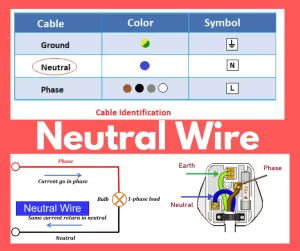
what does the neutral wire do
🔌 What Is a Neutral Wire?
The neutral wire is a conductor that returns electrical current from the load (appliance, light, outlet) back to the power source, typically the transformer or main panel. It works in tandem with the hot (live) wire, which delivers power to the device.
✅ Key Characteristics:
-
Carries current under normal conditions
-
Completes the electrical loop
-
Typically white or gray in color
-
Connects to ground at the main service panel (but not throughout the system)
🧠 What Does the Neutral Wire Actually Do?
1. Completes the Circuit
Electricity needs a closed loop to flow. The hot wire sends electricity into a device, and the neutral wire sends it back, forming a complete circuit.
2. Maintains Voltage Stability
Neutral wires help maintain a balanced voltage level across different circuits, especially in multi-phase or 240V systems.
3. Enhances Electrical Safety
By giving current a safe return path, the neutral helps prevent short circuits or overheating that could lead to fire or damage.
🛠 Example: Neutral Wire in a Home Outlet
In a standard 120V household outlet:
-
Hot wire (black/red): Supplies power to the device
-
Neutral wire (white): Returns used current to the panel
-
Ground wire (green/bare): Acts only during faults
When you plug in a device, electricity flows in through the hot, powers the device, and flows back through the neutral.
⚠️ Is the Neutral Wire Safe to Touch?
No. Although the neutral is grounded at the main panel, it can still carry current. Touching a live neutral wire can result in electric shock, especially if the circuit is energized or the connection is faulty.
🔧 Neutral Wire vs. Ground Wire: What's the Difference?
| Feature | Neutral Wire | Ground Wire (Earth) |
|---|---|---|
| Carries current? | ✅ Yes (normal use) | ❌ Only during faults |
| Purpose | Complete the circuit | Safety backup path |
| Connected to? | Grounded at main panel | Ground rod or earth bar |
| Color | White or Gray | Green / Bare copper |
👉 See also: Difference Between Neutral Wire and Earth Wire
🧯 What Happens If the Neutral Wire Breaks?
If the neutral wire is disconnected or damaged:
-
Appliances may stop working
-
Voltage imbalance can damage electronics
-
Shock hazards or fire risk can increase
That’s why neutral continuity is so important in every circuit.
🏠 Common Applications of Neutral Wires
-
Household outlets (120V)
-
Lighting fixtures
-
Major appliances (ovens, dryers, AC units)
-
Smart switches that require a neutral
📌 Conclusion: Why the Neutral Wire Matters
The neutral wire is an essential part of any electrical circuit. Without it, power cannot flow properly, and safety is compromised.
✅ To recap, the neutral wire:
-
Completes the circuit
-
Carries return current
-
Is grounded at the panel but not a ground wire
-
Plays a key role in safe, functional wiring
Need help identifying or installing a neutral wire?
Consult a licensed electrician or refer to your local electrical code for safe practices.


