
A direct burial Ethernet cable is a network cable specifically designed for outdoor installations where the cable will be buried underground without additional protective conduit. These cables are built with extra durability, water-blocking features, and UV resistance to ensure long-lasting performance in harsh conditions.
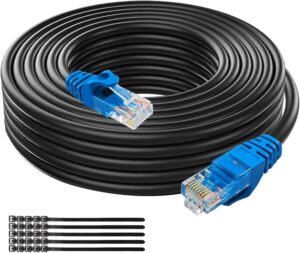
direct burial ethernet cable
Key Features of Direct Burial Ethernet Cable
-
Waterproof Jacket: Typically made of polyethylene (PE) to resist moisture.
-
Gel-Filled or Water-Blocking Tape: Prevents water ingress that can damage internal conductors.
-
UV-Resistant Outer Layer: Protects against sunlight when exposed above ground.
-
Shielding (FTP/STP): Reduces electromagnetic interference (common in outdoor environments).
-
Temperature and Weather Resistance: Withstands extreme heat, cold, and soil pressure.
Why Use Direct Burial Ethernet Cable?
Regular indoor Ethernet cables (like Cat5e or Cat6 PVC) are not suitable for underground installation because:
-
They absorb moisture, leading to corrosion and signal loss.
-
They degrade quickly when exposed to soil and outdoor elements.
Direct burial Ethernet cables are ideal when you need:
-
A wired network connection between buildings (home to garage, office to workshop).
-
Outdoor security cameras or Wi-Fi access points.
-
Long-distance connections where fiber optic is not an option.
Common Types of Direct Burial Ethernet Cable
-
Cat5e Direct Burial Cable
-
Supports speeds up to 1 Gbps.
-
Suitable for most home networks and basic outdoor applications.
-
-
Cat6 Direct Burial Cable
-
Higher performance, up to 10 Gbps at 55m.
-
Great for modern smart homes and professional installations.
-
-
Cat6a or Cat7 Direct Burial Cable
-
For high-speed and future-proof networks.
-
Ideal for enterprise-level or heavy data transfer needs.
-
Installation Tips
-
Minimum Burial Depth: Most local codes recommend 18–24 inches for network cables.
-
Add a Conduit for Extra Protection: While direct burial cables can go without it, conduit offers added safety.
-
Avoid Running Parallel to Electrical Lines: Prevents interference.
-
Mark the Location: Use warning tape above the cable to avoid accidental damage during digging.
FAQs
Q: Can I bury a regular Ethernet cable?
No. Regular Ethernet cables are not rated for direct burial and will fail due to moisture and soil contact.
Q: Do I need conduit for direct burial Ethernet cable?
Not required, but recommended for extra protection, especially at entry/exit points.
Q: How far can I run a direct burial Ethernet cable?
Typically 100 meters (328 feet) for standard Ethernet. Beyond that, consider fiber optic.
✅ Summary: Direct burial Ethernet cable is the best solution for outdoor, underground network installations. It ensures durability, stable connectivity, and compliance with outdoor wiring standards.


