
A direct burial fiber optic cable is a fiber cable designed to be buried underground without the need for additional conduit or protective piping. Unlike standard indoor fiber cables, these cables are engineered for harsh outdoor environments, offering waterproofing, rodent protection, UV resistance, and high tensile strength to ensure reliable data transmission over long distances.
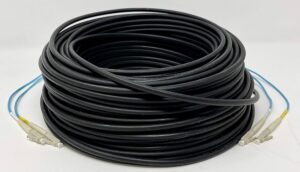
direct burial fiber optic cable
Key Features of Direct Burial Fiber Optic Cable
-
Heavy-Duty Outer Jacket
Made from polyethylene (PE) or similar material to resist moisture, chemicals, and soil conditions. -
Water Blocking Elements
Gel-filled tubes or water-blocking tape prevent water ingress that could damage fibers. -
Rodent Protection
Often includes armored layers (steel tape or corrugated steel) to prevent chewing by rodents. -
UV Resistance
Protects cable from sun damage if partially exposed. -
High Tensile Strength
Handles soil pressure and pulling during installation.
Why Use Direct Burial Fiber Optic Cable?
Direct burial fiber is essential when:
-
Running fiber connections between buildings (campus, data center, industrial site).
-
Laying long-distance outdoor fiber networks without conduit.
-
Deploying fiber in rural or rugged terrain where conduit is impractical.
Compared to copper Ethernet cables, fiber offers much higher bandwidth and longer transmission distances, making it the preferred choice for backbone connections.
Types of Direct Burial Fiber Optic Cable
-
Armored Direct Burial Fiber
-
Includes corrugated steel tape armor for extra protection.
-
Ideal for rocky soil or rodent-prone areas.
-
-
Loose Tube Gel-Filled Cable
-
Water-blocking gel inside tubes for maximum moisture protection.
-
Common in outdoor telecom and ISP installations.
-
-
All-Dielectric Self-Supporting (ADSS)
-
Non-metallic, used when electrical interference is a concern.
-
Can be buried or aerially deployed.
-
Installation Guidelines
-
Recommended Burial Depth:
Typically 18–36 inches depending on local code and soil conditions. -
Mark the Route:
Use warning tape above the cable to prevent accidental cuts. -
Avoid Sharp Bends:
Maintain minimum bend radius to protect fibers. -
Optional Conduit:
Even with direct burial rating, conduit can add extra protection in high-risk zones.
FAQs
Q: Can I bury indoor fiber optic cable?
No. Indoor fiber lacks waterproofing and UV resistance; it will fail quickly outdoors.
Q: How far can direct burial fiber run?
Up to several kilometers, depending on the fiber type (single-mode vs. multimode).
Q: Do I need special connectors for outdoor fiber?
Yes. Use weatherproof enclosures and connectors rated for outdoor environments.
✅ Summary: Direct burial fiber optic cables are the best choice for outdoor, underground installations requiring high speed, long-distance connectivity, and extreme durability.


