
When it comes to choosing the right cable insulation for electrical power systems, XLPE (Cross-Linked Polyethylene) and PVC (Polyvinyl Chloride) are two of the most widely used materials. Both have unique properties that suit different applications. In this article, we’ll compare XLPE vs PVC cable in terms of thermal performance, electrical characteristics, flexibility, durability, and cost, helping you determine which is better for your project.
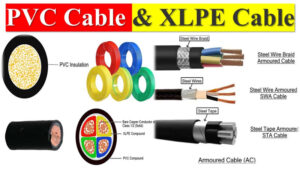
XLPE vs PVC Cable
What Is XLPE Cable?
XLPE cable features cross-linked polyethylene insulation, which is chemically or physically treated to enhance its heat resistance, dielectric strength, and mechanical durability.
-
Operating temperature: up to 90°C continuous and 250°C short circuit.
-
Applications: ideal for underground power distribution, high-voltage transmission, industrial plants, and renewable energy systems.
-
Key advantage: low dielectric losses and high resistance to moisture, chemicals, and aging.
What Is PVC Cable?
PVC cable uses polyvinyl chloride insulation, which is a cost-effective and widely available material.
-
Operating temperature: typically 70°C (some types up to 90°C).
-
Applications: commonly used for household wiring, building cables, and low-voltage circuits.
-
Key advantage: flexible, easy to install, and generally cheaper compared to XLPE.
XLPE vs PVC Cable – Key Differences
1. Thermal Performance
-
XLPE: Withstands higher operating temperatures (90°C continuous).
-
PVC: Standard PVC cables operate at 70°C, which limits their power-carrying capacity.
Conclusion: For heavy-duty or high-current applications, XLPE cables are superior due to better heat resistance.
2. Electrical Properties
-
XLPE: Offers lower dielectric constant and minimal dielectric losses, improving energy efficiency in power transmission.
-
PVC: Higher dielectric losses compared to XLPE, making it less efficient for long-distance power transmission.
Conclusion: XLPE performs better for high-voltage and long-distance power networks.
3. Durability & Chemical Resistance
-
XLPE: Highly resistant to moisture, corrosion, and most chemicals, making it ideal for underground and outdoor installations.
-
PVC: Good general resistance but can degrade faster under harsh chemical or UV exposure.
Conclusion: For harsh industrial environments, XLPE insulation provides longer life and reliability.
4. Flexibility & Installation
-
XLPE: Stiffer compared to PVC, especially in large cross-sectional sizes.
-
PVC: Easier to handle and bend during installation, suitable for compact spaces.
Conclusion: PVC is preferred where flexibility is critical, but XLPE remains the choice for high performance.
5. Fire Performance
-
XLPE: Available in LSZH (Low Smoke Zero Halogen) versions for fire-sensitive environments.
-
PVC: Standard PVC produces toxic smoke when burned, although flame-retardant PVC types exist.
Conclusion: LSZH XLPE is safer in public buildings and confined spaces.
6. Cost Comparison
-
XLPE: Slightly more expensive due to superior performance and longer lifespan.
-
PVC: Lower initial cost, but may require earlier replacement in demanding environments.
Conclusion: For long-term projects, XLPE’s reliability often justifies the extra cost.
Which Is Better – XLPE or PVC?
The choice depends on your application and budget:
-
Choose XLPE cable for high-voltage systems, outdoor or underground installations, and industrial environments where long-term performance is crucial.
-
Choose PVC cable for low-voltage, indoor wiring, and projects requiring flexibility at a lower cost.
XLPE vs PVC Cable – Applications Overview
-
XLPE Cable: Power transmission, renewable energy, oil & gas, mining, substations, heavy-duty industrial plants.
-
PVC Cable: Building wiring, household circuits, light-duty electrical systems, control wiring.
Why Choose TOT Wire & Cable?
At TOT Wire & Cable, we manufacture and supply both XLPE insulated power cables and PVC insulated wires, meeting IEC, BS, and ASTM standards.
-
Wide product range: From low-voltage PVC building wires to high-voltage XLPE power cables.
-
Custom options: Available in various conductor sizes, core counts, and armouring types.
-
Competitive pricing: We provide high-quality cables with excellent cost-performance ratio.
-
Global export support: Fast delivery and professional technical consultation.
Contact Us for XLPE & PVC Cable Solutions
Still unsure which cable is right for your project?
Contact TOT Wire & Cable today for expert advice, technical specifications, and competitive quotations on both XLPE and PVC power cables.


