
Whether you're plugging in a power tool on the jobsite, setting up a backyard event, or simply connecting your refrigerator to a distant outlet, extension cords are everyday essentials that deserve more attention than they get. Using the wrong cord can lead to poor performance—or worse, serious fire hazards.
In this comprehensive guide, we’ll break down extension cords by gauge, length, and application, helping you find the best extension cord for every scenario—whether you need a heavy duty extension cord, a long extension cable, or a safe solution for your home appliances.
Choosing the Right Extension Cord
🔌 What Is an Extension Cord?
An extension cord (also called an electrical cord, power cord extension, or plug extension cord) is a flexible cable with connectors on both ends, designed to extend the reach of electrical power from an outlet to a device.
There are many types of electrical extension cords, but the one you need depends on:
-
How much power (amperage/wattage) your device needs
-
Whether you’re using it indoors or outdoors
-
How long the cord must be
-
The gauge of the wire (explained below)
📏 Understanding Extension Cord Gauge: Why Size Matters
What Does “Gauge” Mean?
Extension cords are rated using AWG (American Wire Gauge). This number tells you how thick the internal wires are:
-
Lower numbers = thicker wires = more current capacity
-
Higher numbers = thinner wires = lower power limits
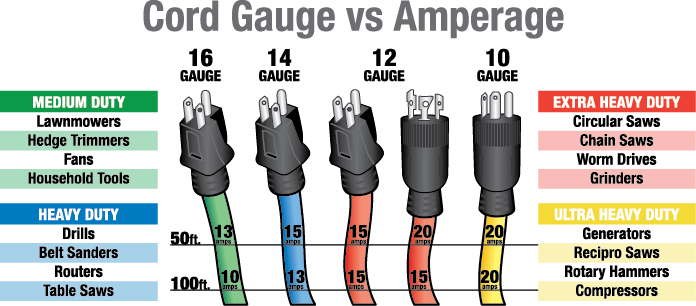
| Gauge (AWG) | Typical Use | Max Amps (approx.) |
|---|---|---|
| 10 gauge | Generators, heavy-duty tools | 30A |
| 12 gauge | Power tools, outdoor equipment | 20A |
| 14 gauge | Small appliances, general use | 15A |
| 16 gauge | Lamps, phone chargers | 10A |
🔌 Extension Cord Gauge Breakdown: Which One Do You Need?
16 Gauge Extension Cords (Light-Duty)
-
Best for: Lamps, fans, phone chargers, alarm clocks.
-
Avoid for: Microwaves, space heaters, refrigerators.
A 16 gauge extension cord is fine for light-duty indoor use, but it should never be used for high-draw appliances. Look for UL/CSA certifications to ensure safety.
14 Gauge Extension Cords (Medium-Duty)
-
Best for: Blenders, TVs, fans, and even refrigerators—if used correctly.
-
Caution: For a refrigerator, use only short (≤10 ft), heavy-duty 14 gauge cords.
Looking for details? See our 14 Gauge Extension Cord Guide for in-depth advice.
✅ What is the best extension cord for a refrigerator?
A 12 or heavy-duty 14 gauge cord, 10 ft or shorter, with a grounded (3-prong) plug and UL/CSA rating.
12 Gauge Extension Cords (Heavy-Duty)
-
Best for: Circular saws, shop vacs, space heaters, outdoor tools.
-
Outdoor Options: Look for SJTW or SJEOW weather-rated jackets.
For most homeowners, a 12 gauge extension cord is the best all-around choice for heavy indoor or outdoor tasks.
10 Gauge Extension Cords (Extra Heavy-Duty)
-
Best for: Compressors, welders, electric mowers, and generators.
-
These heavy-duty drop cords or heavy-duty extension cables are built for maximum power and durability.
If you're working on a construction site or running equipment that pulls a lot of current, you need a 10 gauge heavy duty extension cord.
🌦 Indoor vs. Outdoor Extension Cords
Using the wrong cord outdoors is dangerous. Here's what to look for:
| Cord Type | Jacket Label | Use |
|---|---|---|
| Indoor | SPT, SJT | Dry, indoor spaces |
| Outdoor | SJTW, SJEOW | Wet, cold, UV-exposed environments |
Outdoor cords have thicker insulation and better resistance to abrasion, water, and sunlight. Look for weatherproofing and temperature ratings on packaging.
📏 Extension Cord Length & Voltage Drop
Longer cords = more resistance = more voltage drop.
This means your tool or appliance might get less power than needed, leading to:
-
Reduced performance
-
Overheating
-
Electrical damage
🔹 When is a 10 ft Extension Cord Ideal?
If you’re powering a refrigerator or high-draw tool, a 10 ft 14 or 12 gauge extension cord is ideal. Short cords deliver more reliable current and reduce heat buildup.
🔌 Search Examples:
'10 ft extension cord'
'10 foot extension cord'
'extension cord 10 ft'
🧰 Extension Cord Features to Look For
When shopping for the best extension cord, don’t forget helpful add-ons:
-
Lighted Ends: Confirm power is flowing.
-
Flat Plugs: Fit easily behind furniture.
-
Multiple Outlets: Power several tools (cautiously).
-
Locking Plugs: Prevent disconnects in rough environments.
-
Tangle-Free Jacket: Easier storage and handling.
-
UL/CSA Approved: Safety tested and certified.
⚠️ Extension Cord Safety Tips
Poor extension cord usage is a leading cause of electrical fires. Stay safe with these tips:
-
✅ Never overload the cord’s amperage.
-
❌ Don’t daisy-chain (connect multiple cords).
-
🚫 Avoid rugs, pinch points, and doorways.
-
🔌 Unplug when not in use.
-
🔍 Inspect regularly for cuts, cracks, and exposed wires.
-
🌀 Store properly—avoid tight coils or sharp bends.
✅ Conclusion: Make an Informed Choice
Extension cords may seem simple, but they play a critical role in your electrical safety and efficiency. From a power cord extension in the kitchen to heavy duty extension cables on the job site, choosing the right gauge, length, and rating makes all the difference.
Need high-performance cords? Whether you’re shopping for a long extension cord, a heavy-duty drop cord, or simply want to know what is the best extension cord for a refrigerator, you now have the knowledge to choose with confidence.


