
Bridging the gap between heavy-duty applications (like 6 AWG) and common household circuits (like 10 AWG), 8 gauge (AWG) stranded wire is a crucial conductor known for its robust current capacity and excellent flexibility. Its multi-strand construction is key to its versatility, allowing it to be used in various demanding applications where solid wire would be impractical. This guide will explore the specific attributes, typical ampacity, widespread applications, and critical installation considerations for 8 AWG stranded wire. For a foundational understanding of why stranded wire is chosen over solid, you can refer to our Stranded vs. Solid Wire: Your Ultimate Guide to Choosing the Perfect Electrical Conductor.
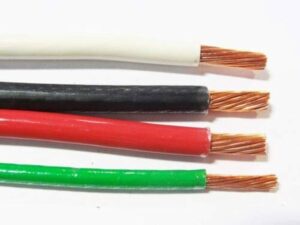
8 gauge stranded wire
Understanding 8 Gauge Stranded Wire
8 AWG is a significant conductor often found in applications that require more power than typical 10 AWG circuits but don't quite need the extreme capacity of 6 AWG. A solid 8 AWG wire would be very stiff and challenging to manipulate. The power of 8 gauge stranded wire stems from its composition: multiple individual copper (or occasionally aluminum) strands twisted together.
Why Stranded for This Gauge? For a wire of this thickness, flexibility is a primary advantage. The stranded construction provides:
- Enhanced Flexibility: Far easier to bend, route through conduits, and navigate around obstacles compared to a solid 8 AWG wire, making installation more efficient.
- Superior Vibration Resistance: It's highly resistant to fatigue and breaking when subjected to constant movement or vibration, which is common in automotive, marine, or some industrial settings.
- Improved Handling: Its pliability makes it generally easier and safer to work with during installation, reducing the risk of kinks or damage.
Common Materials & Insulation: 8 gauge stranded wire is typically made from annealed bare copper for optimal conductivity. Tinned copper is also available for superior corrosion resistance (e.g., in marine or outdoor environments). Insulation types are chosen to match the wire's intended high-current application and environmental conditions:
- THHN/THWN: Common for building wire in conduits, offering resistance to heat, moisture, and oil.
- XLPE: Cross-linked polyethylene, known for its excellent dielectric properties, durability, and higher temperature ratings.
- PVC: General-purpose, cost-effective, often used for flexible power cords.
- Battery Cable Insulation: Specialized thick PVC or rubber compounds, designed for the demanding conditions and high currents in vehicle battery connections.
8 Gauge Stranded Wire Ampacity (Current Carrying Capacity)
Ampacity for 8 AWG stranded wire reflects its role in mid-to-heavy power distribution:
- 40 Amps at 60°C (140°F) insulation rating
- 50 Amps at 75°C (167°F) insulation rating
- 55 Amps at 90°C (194°F) insulation rating
Crucial Caveats: These are general guidelines. The actual safe ampacity is influenced by:
- Insulation type and its temperature rating.
- Number of current-carrying conductors in a conduit or bundle: More wires mean reduced heat dissipation, necessitating derating.
- Ambient temperature: Hotter environments reduce the maximum current capacity.
- Installation method: Wires in free air can carry more current than those in conduit or direct burial.
- Local electrical codes: Always consult the National Electrical Code (NEC) or your local equivalent for specific requirements, as these are the definitive rules for safe wiring.
For a comprehensive explanation of ampacity and its influencing factors, refer to our Understanding Wire Gauge (AWG) and Ampacity: A Complete Guide.
Key Applications of 8 Gauge Stranded Wire
The blend of substantial current capacity and flexibility makes 8 AWG stranded wire incredibly versatile for various demanding applications:
- Large Appliance Circuits: Essential for dedicated circuits for electric ovens, larger central air conditioning units, or other appliances requiring 40-50 amp circuits.
- Battery Cables (Automotive, Marine, RV): Frequently used for connecting batteries to starters, inverters, or main power distribution in vehicles, boats, and recreational vehicles, where flexibility and vibration resistance are paramount.
- Industrial Equipment Wiring: For powering medium-power motors, control panels, and other machinery in industrial settings.
- Solar Power Systems: Often used for main power runs connecting solar panels to inverters or charge controllers in mid-sized solar installations.
- Subpanel Feeds (for lower power subpanels): For connecting a main electrical panel to smaller subpanels that distribute power to specific zones.
- Electric Vehicle (EV) Chargers (Higher Amperage): While 10 AWG is common, 8 AWG might be used for higher amperage (e.g., 40-50 amp) Level 2 EV charging stations.
- Audio Power Cables: For very high-power car audio systems (e.g., amplifiers with significant current draw).
Installation Considerations for 8 Gauge Stranded Wire
Working with 8 AWG stranded wire requires proper tools and techniques to ensure safe and reliable connections:
- Ease of Routing: Its stranded nature significantly eases the process of pulling this relatively thick wire through conduits and routing it around bends compared to its solid counterpart.
- Appropriate Tools: You'll need wire strippers capable of cleanly removing insulation from 8 AWG without damaging individual strands.
- Secure Termination: Ensuring a low-resistance and durable connection is critical for high-current applications.
- Lugs/Terminals: Use crimp lugs or bolt-on terminals specifically designed for 8 AWG wire. These are typically robust copper or brass components.
- Hydraulic or Ratcheting Crimpers: For secure connections, a standard plier-style crimper is usually insufficient. A specialized hydraulic or heavy-duty ratcheting crimper is needed to properly compress the lug onto the wire.
- Heat Shrink Tubing: Often applied over crimped connections to provide insulation, strain relief, and environmental protection against moisture and corrosion.
- Ferrules: For screw-down terminal blocks where individual strands must be consolidated, large ferrules are crucial for preventing stray strands and ensuring a reliable contact.
Our Essential Wire Termination Techniques for Every Project provides more in-depth guidance on proper termination for heavy-gauge wires.
Where to Buy 8 Gauge Stranded Wire
8 gauge stranded wire is available at electrical supply houses, specialized automotive and marine stores, and various online retailers that cater to industrial or heavy-duty electrical needs. Ensure the wire's insulation type and any specific certifications (e.g., UL listed, marine-grade) match your application.
Safety Reminders
Safety is paramount when working with high-current wiring. Always:
- Ensure the wire's ampacity is correctly matched to the circuit breaker/fuse rating and the maximum expected electrical load. Never undersize the wire.
- Strictly adhere to the National Electrical Code (NEC) or your local electrical regulations. These codes dictate wire sizing, installation methods, and overcurrent protection requirements.
- Verify the insulation is rated for the operating environment, including temperature extremes, moisture, and potential exposure to chemicals or abrasion.
- For any complex or high-stakes electrical work, always consult or hire a qualified and licensed electrician.
Conclusion
8 gauge stranded wire is a critical component in electrical systems requiring a balance of substantial current capacity and essential flexibility. Whether you're wiring large appliances, upgrading automotive power systems, or managing solar energy, understanding its robust characteristics and precise installation methods ensures a safe, efficient, and exceptionally reliable electrical backbone for your projects.


