
Choosing between 12 and 14 gauge wire is one of the most critical decisions in home electrical work. While they may look similar, the slight difference in thickness has significant implications for safety, performance, and code compliance. Whether you're wiring a new outlet, replacing light fixtures, or planning a full remodel, understanding the difference is essential.
This guide provides a practical, easy-to-understand breakdown of 12 vs. 14 gauge wire, answering the most common questions and helping you make the right choice for outlets, lighting circuits, and more.
The Golden Rule of Home Electrical Wiring
Wire gauge determines how much electrical current (ampacity) a wire can safely carry. This, in turn, dictates the size of the circuit breaker:
- 14-gauge wire is rated for 15 amps and is typically used for lighting and general-purpose outlets.
- 12-gauge wire is rated for 20 amps and is used in areas where appliances or tools require more power.
Core Safety Principle: You can use 12-gauge wire on a 15-amp breaker, but you can never use 14-gauge wire on a 20-amp breaker. Doing so creates a serious fire hazard.
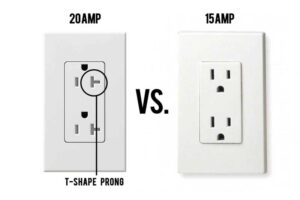
12 or 14 gauge wire for outlets
12-Gauge Wire: The 20-Amp Workhorse
- What is it? A thicker wire designed for heavier electrical loads.
- Applications:
- Kitchen and bathroom outlets
- Laundry rooms
- Garage and outdoor circuits
- Dedicated appliance circuits (microwaves, dishwashers)
- Long circuit runs to minimize voltage drop
- Common Cable Type: 12/2 Romex (12-gauge, 2 insulated conductors plus ground)
14-Gauge Wire: The 15-Amp Standard
- What is it? A thinner wire commonly used for standard lighting and low-demand outlets.
- Applications:
- Bedroom and living room outlets
- Hallway and ceiling lighting circuits
- Smoke alarms and doorbells
- Common Cable Type: 14/2 Romex
12 vs. 14 Gauge Comparison Table
| Feature | 14-Gauge Wire (15A) | 12-Gauge Wire (20A) |
|---|---|---|
| Ampacity | Up to 15 Amps | Up to 20 Amps |
| Circuit Breaker | 15A Breaker | 20A Breaker |
| Wire Diameter | Thinner | Thicker |
| Cost | Lower | Higher |
| Flexibility | More flexible | More rigid |
| Common Use | Lighting, general-purpose outlets (bedrooms) | Kitchens, bathrooms, high-demand outlets |
| Safety Rule | Never use on a 20A breaker | Can be used on a 15A breaker (more robust) |
Common Questions Answered (FAQ)
Q: Can I use 14/2 wire for outlets? A: Yes, but only on a 15-amp circuit with a 15-amp breaker. Never use it on a 20-amp circuit.
Q: What is 12/2 Romex used for? A: Standard for 20-amp circuits in kitchens, bathrooms, garages, and laundry rooms.
Q: Which wire is bigger, 12 or 14 gauge? A: 12-gauge is bigger and thicker than 14-gauge.
Q: Is it okay to use 12-gauge wire on a 15-amp breaker? A: Yes. It’s perfectly safe and sometimes recommended, although it costs more.
Conclusion
Understanding the difference between 12 and 14 gauge wire is crucial for safe and code-compliant electrical work. Remember:
- Use 14-gauge wire for 15-amp circuits (lighting, bedrooms)
- Use 12-gauge wire for 20-amp circuits (kitchens, bathrooms, garages)
- Never use 14-gauge wire on a 20-amp breaker
Always consult local codes or a licensed electrician before starting any project.


