
As electric vehicles (EVs) rapidly transition from niche innovation to mainstream mobility, the focus often falls on batteries and motors. Yet, one critical component quietly ensures everything runs smoothly—the high-voltage cable. These cables are more than just conduits for electricity; they are the nervous system and arteries of every EV, transmitting high currents between essential components like the battery pack, motor, inverter, and onboard charger.
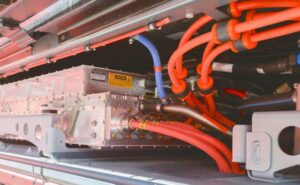
ev high voltage cable
This article serves as your comprehensive guide to electric vehicle wire, covering its definition, structure, functions, and how it differs from traditional automotive wiring. Whether you're a vehicle designer, supplier, or EV enthusiast, understanding EV high-voltage cabling is key to unlocking performance, safety, and reliability in modern electric cars.
Part 1: What Is an EV High-Voltage Cable?
Definition and Function
An EV high-voltage cable is a specially engineered electrical wire designed to handle high voltages (typically 400V or 800V) and large currents within electric vehicles. Unlike conventional automotive wires, which usually manage low-voltage signals or 12V DC power, EV high-voltage cables are built to connect and power critical high-voltage components, including:
-
Battery pack
-
Inverter
-
Traction motor
-
DC/DC converter
-
Onboard charger
-
Charging inlet
Key Differences from Traditional Automotive Wires
| Feature | Traditional Automotive Wire | EV High-Voltage Cable |
|---|---|---|
| Voltage Rating | ~12V to 48V | 400V to 1000V |
| Insulation | Basic PVC or TPE | High-grade XLPE, silicone, or fluoroelastomers |
| Shielding | Rarely used | Required for EMI suppression |
| Flexibility | Moderate | High, due to tighter routing |
| Safety Requirements | Lower | Very high (thermal, mechanical, and electrical) |
Part 2: Anatomy and Technology Behind High-Voltage EV Cables
Conductor: The Power Core
EV cables typically use stranded tinned copper conductors, offering both high conductivity and excellent flexibility. Stranding makes the cable easier to route through compact vehicle architectures.
Insulation Layer: First Line of Defense
The insulation is usually made from XLPE (cross-linked polyethylene), ETFE, or silicone rubber, selected for their:
-
High dielectric strength
-
Thermal resistance (125°C to 200°C)
-
Oil and chemical resistance
-
Flame retardancy
Shielding: Protecting the Electronic Ecosystem
Electromagnetic Interference (EMI) is a major concern in EVs. High-voltage cables generate strong electromagnetic fields that can disrupt vehicle electronics. To prevent this, cables feature metallic braided shields or foil tapes to:
-
Contain EMI
-
Block external interference
-
Ensure safe signal transmission
Outer Jacket: Environmental Protection
The outer sheath must withstand:
-
Abrasion from vibration or vehicle movement
-
Moisture and salt spray in underbody routing
-
Oils and coolants in the engine bay
-
Temperature extremes
Materials like TPV, PUR, or thermoplastic elastomers are commonly used for robust, flexible protection.
Part 3: Key Applications of High-Voltage Cables in EVs
1. Electric Powertrain
The high-voltage cable system forms the backbone of the EV drivetrain. It connects:
-
Battery pack → Inverter
-
Inverter → Electric motor
This setup ensures efficient, high-power delivery to the wheels.
2. Charging Systems
When the vehicle is plugged in, the high-voltage cable routes power from the charging port to the onboard charger and then to the battery pack. It must accommodate:
-
AC Level 1/2 charging
-
DC fast charging (up to 1000V)
3. Hybrid and Plug-in Hybrid Vehicles (HEV/PHEV)
In hybrids, high-voltage cables also connect to the internal combustion engine’s generator, enabling energy recuperation and load balancing. This requires additional shielding and thermal management due to engine heat and vibrations.
Part 4: Safety and Quality Standards for EV High-Voltage Wires
Safety Challenges
EV high-voltage systems must perform safely under conditions like:
-
Thermal cycling from charge/discharge cycles
-
Mechanical stress from vibrations and movement
-
Moisture ingress in exposed environments
-
High-frequency EMI noise
Industry Standards and Certifications
Reliable high-voltage cable systems comply with globally recognized standards such as:
-
ISO 6722-1 / ISO 19642 (Road vehicle wire specifications)
-
LV 216 / LV 112 (German automotive standards)
-
USCAR-21 (Performance for shielded HV cables)
-
SAE J1654 / SAE J2840 (Thermal and electrical requirements)
Conclusion: Why High-Voltage Cables Matter in Every Electric Vehicle
As electric cars become more powerful, more efficient, and more connected, high-voltage cables play an increasingly vital role in making this progress possible. These cables are not merely wires; they are critical enablers of energy transfer, safety, and system performance.
Whether it's reducing charging time, improving drivetrain efficiency, or ensuring compliance with EMC standards, the quality of EV high-voltage wiring can make or break the driving experience.


1 comment
Tlovertonet 08/24/2025
I got what you mean , regards for putting up.Woh I am glad to find this website through google.