
Jumper cables are an essential piece of emergency equipment for any vehicle owner. But with so many options available, how do you know which one is right for you? Choosing the wrong cables can lead to a failed jump start or even damage your car's electrical system. This guide will help you understand the key factors and make an informed decision based on your specific needs.
Understanding the Key Factors
When you search for jumper cables, you'll see a lot of terms like “heavy duty,” “gauge,” and different lengths. These are the most important factors to consider.
1. Gauge: The Thicker, The Better
Gauge refers to the thickness of the cable's wire. A lower gauge number means a thicker wire, which can handle more electrical current. This is the single most important factor for a successful jump start.
- 6-Gauge: A good, all-purpose option for small to mid-sized cars. These are the most common and will work for most everyday situations.
- 4-Gauge: A step up in performance, ideal for larger sedans, SUVs, or small trucks. If you want a reliable cable that can handle a variety of vehicles, 4-gauge is a great choice.
- 2-Gauge or 1-Gauge: These are considered heavy-duty cables and are a must-have for large trucks, diesel engines, and commercial vehicles. They can handle the significant current needed to start a powerful engine. If you frequently jump-start large vehicles, these are the cables you need.
2. Length: Don’t Get Stuck
The length of your cables can be the difference between a successful jump and a frustrating experience. While most cables are 12 to 16 feet long, longer cables offer more flexibility.
- 12-16 Feet: This is a standard length that works well when two cars can be parked close together.
- 20-25 Feet: If you have a large vehicle or want the flexibility to jump-start in tight parking spots or crowded areas, a longer cable is a smart investment. For commercial or heavy-duty use, a longer cable is often essential to reach batteries on different sides of large vehicles.
3. Material: Copper vs. CCA
The material inside the cable affects its conductivity.
- 100% Copper: This is the best material for conducting electricity and is found in high-quality cables. Copper cables are more efficient and less prone to overheating.
- Copper-Clad Aluminum (CCA): These cables use an aluminum core with a thin layer of copper coating. They are more affordable but less efficient than pure copper and may not perform as well under heavy loads.
Choosing Cables for Your Specific Vehicle
- For Cars and Sedans: A 4-gauge cable that is 16 feet long is a great choice. It offers a good balance of power and flexibility for most cars.
- For Diesel Trucks and Heavy Equipment: You need the most power you can get. A 2-gauge or 1-gauge cable, at least 20 feet long, is highly recommended. These heavy-duty jumper cables are specifically designed to handle the high current demands of large engines.
- For Emergency Use: If you want a quick and easy solution that doesn't require a second car, consider a jump starter cable with a built-in battery.
A Step-by-Step Safety Guide: How to Use Jumper Cables
Knowing how to properly attach jumper cables is just as important as buying the right ones.
- Turn off both cars and engage the parking brakes.
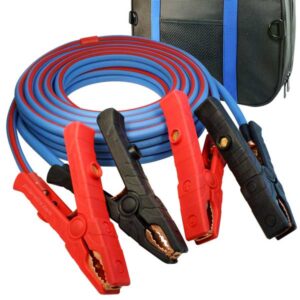
- Connect the red (positive) clamp to the positive terminal of the dead battery.
- Connect the other red (positive) clamp to the positive terminal of the good battery.
- Connect the black (negative) clamp to the negative terminal of the good battery.
- Connect the final black (negative) clamp to an unpainted metal surface on the car with the dead battery, away from the battery itself.
- Start the car with the good battery and let it run for a few minutes.
- Start the car with the dead battery.
- Once the car is running, carefully remove the cables in the reverse order of connection.
By following this guide, you can choose the right jumper cables for your vehicle and be prepared for any roadside emergency.


