
When you're shopping for an air conditioner extension cord, you'll quickly notice the terms 10-gauge and 12-gauge. But what do these numbers mean, and which one should you choose for your home? The choice between these two gauges is critical for both the performance and safety of your AC unit.
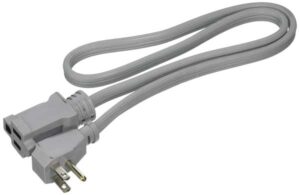
air conditioner extension cord
The Key Difference: Wire Thickness and Power Capacity
The primary difference between a 10-gauge and a 12-gauge cord is the thickness of the internal copper wires. Remember the rule: the smaller the number, the thicker the wire.
- 12-Gauge Cord: This cord has a thinner wire than a 10-gauge cord. It is perfectly safe for most standard window AC units that draw up to 15 amps of current.
- 10-Gauge Cord: This cord has a thicker wire, giving it a much lower resistance. It can safely handle a higher current load, typically up to 30 amps.
Because a 10-gauge extension cord has less resistance, it generates less heat and is more efficient at transmitting power. This makes it an ideal choice for larger, more powerful AC units or for anyone who wants an extra layer of safety.
How to Choose Between a 10-Gauge and 12-Gauge Cord
To make the right choice, you'll need to know the electrical requirements of your air conditioner.
- Check the AC Unit's Label: Look for the nameplate on your AC unit, which lists its electrical ratings. You're looking for the Amps (A) or Watts (W).
- Calculate the Amperage: If only the wattage is listed, you can calculate the amperage using a simple formula: Amps = Watts / Volts. For a standard 120V household outlet, simply divide the wattage by 120.
- Make Your Selection:
- If your AC unit draws 15 amps or less, a 12-gauge extension cord will be safe and sufficient.
- If your AC unit draws more than 15 amps (this is common for larger or commercial units), you must use a 10-gauge extension cord.
If you're still unsure, a 10-gauge extension cord is always the safer bet. It costs a bit more but provides a greater margin of safety, especially if you have a powerful AC unit.
Both a 10-gauge extension cord and a 12-gauge extension cord are considered 'heavy-duty,' but understanding their different capacities is key to making a safe and informed decision.


