
It’s a question that has divided audiophiles for decades: Can a high-end audio cable truly improve the sound quality of a stereo system, or is it nothing more than an expensive accessory? While some swear by the tangible sonic improvements of premium cables, others dismiss them as pure snake oil, a testament to the power of placebo. This article will explore the great cable debate from both a scientific and a subjective perspective, seeking to understand the science behind the controversy and the psychology of what we hear.
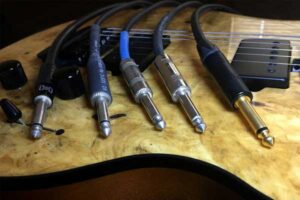
Does the Cable Improve the Sound, or Is It Just Aesthetic
The Scientific Case: A Matter of Physics
From a purely technical standpoint, the argument against expensive cables seems straightforward. According to the principles of electrical engineering, a cable's performance is determined by three fundamental properties: resistance, capacitance, and inductance.
- Resistance: This property affects signal loss. However, for the short lengths of cable used in home audio systems, the resistance of even a basic copper wire is so low that any signal degradation is practically immeasurable and inaudible to the human ear.
- Capacitance & Inductance: These two properties can act together to form a low-pass filter, which theoretically could cause a slight loss of high-frequency information. However, engineers argue that for most audio frequencies, this effect is negligible and far less significant than the influence of other components in the audio chain, such as the speakers and amplifier.
Proponents of this view maintain that as long as a cable is properly constructed and free from defects, its sonic signature is effectively neutral. Any perceivable difference in sound is more likely the result of other factors, not the cable itself.
The Subjective Case: The Art of Listening
On the other side of the aisle are the audiophiles who firmly believe that cables are a crucial component for achieving sonic perfection. They often describe a variety of improvements that defy simple electrical measurements.
- Noise and Interference: A well-designed, shielded cable can effectively block out electromagnetic interference (EMI) and radio-frequency interference (RFI). In a system with a lot of noise, a premium shielded cable can genuinely lower the noise floor, allowing finer details and nuances in the music to emerge more clearly.
- System 'Tuning': The electrical properties of a cable, however subtle, can interact with an audio system in unique ways. For example, a cable with slightly higher capacitance might very gently roll off a system's harsh high frequencies, making the sound feel smoother and more pleasant. For a listener with a finely tuned ear, this can be perceived as a significant improvement.
- The Power of Perception: We cannot ignore the powerful role of psychoacoustics and the placebo effect. When a listener invests a significant amount of money in a cable, their brain is primed to expect an improvement. This expectation, combined with the subtle variations in sound that are part of any A/B testing, can lead to a genuine feeling of enhanced sound quality, even if the underlying electrical signal is largely unchanged.
Conclusion: The Best of Both Worlds
So, where does the truth lie? The answer, as is often the case, is somewhere in the middle. From a scientific perspective, a cable is a passive conduit, and its impact on sound is minimal as long as it's built to a decent standard. From a subjective perspective, the right cable can act as a subtle tuning tool, influencing the overall sonic character of a system and, in some cases, truly reducing background noise.
So, what should an audio enthusiast do? Here are a few pieces of advice:
- Prioritize Your Budget: Invest the bulk of your money in the components that have the greatest impact on sound—your speakers and amplifier. A great sound system with basic cables will always outperform a mediocre system with expensive cables.
- Trust Your Ears: If you have the opportunity, always audition cables in your own system. A blind A/B test is the most reliable way to determine if you can genuinely hear a difference.
- Balance Function and Aesthetics: Acknowledge that a beautiful, well-made cable can also be a source of pride and a finishing touch to an aesthetically pleasing system.
Ultimately, the goal of any audio setup is to maximize your enjoyment of music. Whether you achieve that with a simple wire or a high-end masterpiece, the most important thing is that you're happy with what you hear.


