
Fiber optic patch cables are the backbone of modern high-speed networks. Whether you’re setting up a data center, enterprise LAN, or telecom system, you’ll almost certainly come across LC to LC fiber patch cables in either single mode or multimode varieties.
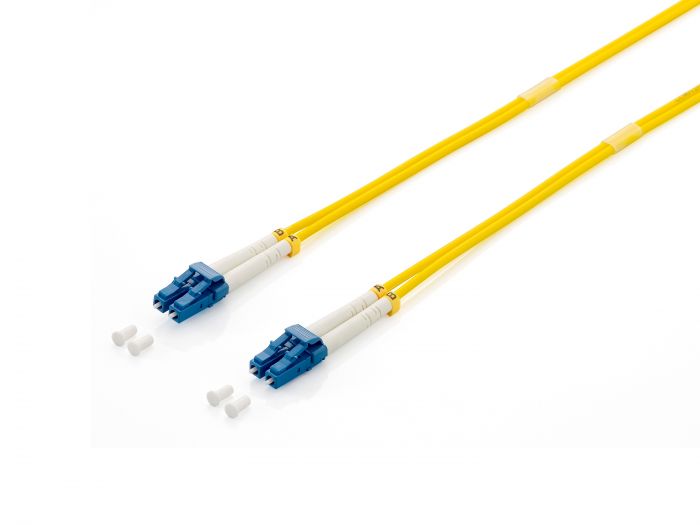
Fiber Optic Patch Cable
But what exactly is the difference between them — and how do you know which type your network needs? This guide explains the basics and helps you choose the right patch cable for your application.
What Is a Fiber Optic Patch Cable?
A fiber optic patch cable (also called a fiber jumper or patch cord) is a short-length fiber cable used to connect network devices like switches, servers, or patch panels.
The key features of a patch cable are:
-
Connectors on both ends (e.g., LC to LC, SC to SC, LC to SC)
-
Pre-terminated, ready to use (no splicing required)
-
Available in single mode (OS2) or multimode (OM1/OM2/OM3/OM4)
Among these, the LC to LC patch cable is the most widely used due to its compact connector design and high-density compatibility.
Single Mode vs. Multimode Fiber: The Core Difference
The main difference lies in how light travels through the fiber core:
🔹 Single Mode Fiber (OS2)
-
Core Size: 8–10 µm
-
Light Transmission: Only one mode of light travels, reducing signal loss
-
Distance: Ideal for long-distance transmission (up to 40 km or more)
-
Speed: Supports 10G/40G/100G+ speeds
-
Typical Jacket Color: Yellow
👉 Example: LC to LC Single Mode Fiber Patch Cable – perfect for telecom networks, inter-building connections, or long-haul data center links.
🔹 Multimode Fiber (OM1/OM2/OM3/OM4)
-
Core Size: 50 µm or 62.5 µm
-
Light Transmission: Multiple modes of light travel simultaneously
-
Distance: Best for short-distance connections (up to 550m depending on OM type)
-
Speed: Optimized for high bandwidth in LANs and data centers
-
Typical Jacket Color: Aqua (OM3/OM4), Orange (OM1/OM2)
👉 Example: LC to LC Multimode Fiber Patch Cable – commonly used in data centers, enterprise LANs, and server-to-switch connections.
LC to LC Fiber Patch Cables: Why They’re Popular
The LC connector (Lucent Connector) has a 1.25 mm ferrule and compact latch design, making it the industry standard for high-density environments.
Advantages of LC to LC Patch Cables:
-
Space-saving design for racks and panels
-
Reliable performance with low insertion loss
-
Available in both single mode and multimode versions
-
Widely supported in 10G, 40G, and 100G network equipment
How to Choose: Single Mode or Multimode?
| Feature | Single Mode LC | Multimode LC |
|---|---|---|
| Core Size | 8–10 µm | 50/125 µm or 62.5/125 µm |
| Distance | Up to 40 km+ | Up to 550 m |
| Speed | 10G/40G/100G+ | 10G/40G/100G (short range) |
| Best Use | Long-haul, telecom, inter-building | Data centers, LANs, server rooms |
| Jacket Color | Yellow | Aqua (OM3/OM4), Orange (OM1/OM2) |
👉 Choose Single Mode LC if you need long-distance, high-performance connections.
👉 Choose Multimode LC if you’re connecting equipment within the same room, rack, or building.
Final Thoughts
Both single mode and multimode LC to LC fiber patch cables are essential for modern networking. The right choice depends on your distance, speed, and environment requirements.
At the end of the day:
-
Use single mode LC patch cables for telecom and long-haul applications.
-
Use multimode LC patch cables for cost-effective, short-distance, high-speed networking.
👉 Ready to upgrade your network? Explore our full range of LC to LC Single Mode Fiber Patch Cables and LC to LC Multimode Fiber Patch Cables — designed for reliability, high performance, and long service life.


