
When working with modern electronic devices, you’ll often encounter flex cables—but not all flex cables are the same. The two most common types are FFC (Flexible Flat Cable) and FPC (Flexible Printed Circuit).
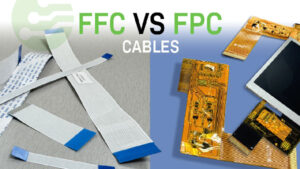
FFC vs FPC Cables
At first glance, they may look similar, but their construction, applications, and capabilities are very different. This article provides a side-by-side comparison of FFC vs FPC, helping you choose the right one for your project.
📌 What is FFC (Flexible Flat Cable)?
An FFC is a simple flat cable consisting of parallel stranded or solid copper conductors laminated between flexible plastic films, usually PET or polyester.
Key Features of FFC:
-
Flat and ribbon-like shape
-
Low cost, mass-produced
-
Limited to simple, parallel connections
-
Mostly used in board-to-board connections (e.g., laptop keyboards, printers)
📌 What is FPC (Flexible Printed Circuit)?
An FPC is a more advanced version of a flex cable, where circuit patterns are etched on a flexible substrate such as polyimide film.
Key Features of FPC:
-
Can be single-layer, double-layer, or multi-layer
-
Supports complex routing of signals
-
Allows integration of electronic components directly on the circuit
-
Excellent mechanical flexibility and reliability
-
Used in smartphones, LCDs, cameras, and medical devices
🔍 FFC vs FPC: Side-by-Side Comparison
| Feature | FFC (Flexible Flat Cable) | FPC (Flexible Printed Circuit) |
|---|---|---|
| Structure | Parallel copper conductors laminated in plastic | Etched copper circuits on polyimide film |
| Flexibility | Moderate (good for simple bends) | High (can fold, twist, or wrap tightly) |
| Complexity | Simple, limited to parallel connections | Complex, supports multi-layer designs |
| Cost | Low (economical) | Higher (due to advanced manufacturing) |
| Durability | Less durable under repeated bending | Highly durable and reliable |
| Applications | Printers, laptops, scanners, simple connections | Smartphones, LCD displays, wearables, cameras |
| Integration of Components | Not possible | Possible (can mount chips, sensors, LEDs) |
📱 Real-World Applications
-
FFC Examples:
-
Laptop keyboard connections
-
Inkjet printers
-
Optical drives
-
Scanners
-
-
FPC Examples:
-
Smartphone and tablet LCDs
-
Wearable electronics
-
Digital cameras (lens modules)
-
Automotive infotainment systems
-
✅ How to Choose Between FFC and FPC?
When deciding whether to use FFC or FPC, consider the following:
-
For simple, low-cost connections → Use FFC.
-
For compact, high-density, and complex circuits → Use FPC.
-
If durability and repeated flexing are required → Choose FPC.
-
If budget is limited and performance needs are basic → Choose FFC.
Conclusion
Both FFC and FPC fall under the category of flex cables, but they serve very different purposes.
-
FFC is affordable and ideal for straightforward, flat connections.
-
FPC offers greater flexibility, higher reliability, and the ability to integrate components.
👉 If you’re designing or repairing a device, understanding the differences between FFC vs FPC will help you make the right choice.
👉 Learn more in our Ultimate Guide to Flex Cables


1 comment
Zoritoler imol 09/27/2025
A lot of the things you mention is astonishingly legitimate and it makes me wonder why I had not looked at this in this light before. This piece truly did turn the light on for me personally as far as this specific subject goes. But there is one particular position I am not really too comfy with and while I try to reconcile that with the actual central theme of the position, allow me see exactly what the rest of your visitors have to say.Well done.