
When choosing electrical wire for a home, building, or industrial project, one of the most common questions is:
Is copper wire better than aluminum?
And—what is the difference between copper vs aluminum wire?
Both metals are widely used in electrical systems, but they have different strengths, limitations, and ideal applications. This guide explains everything you need to know so you can choose the right conductor for your installation.
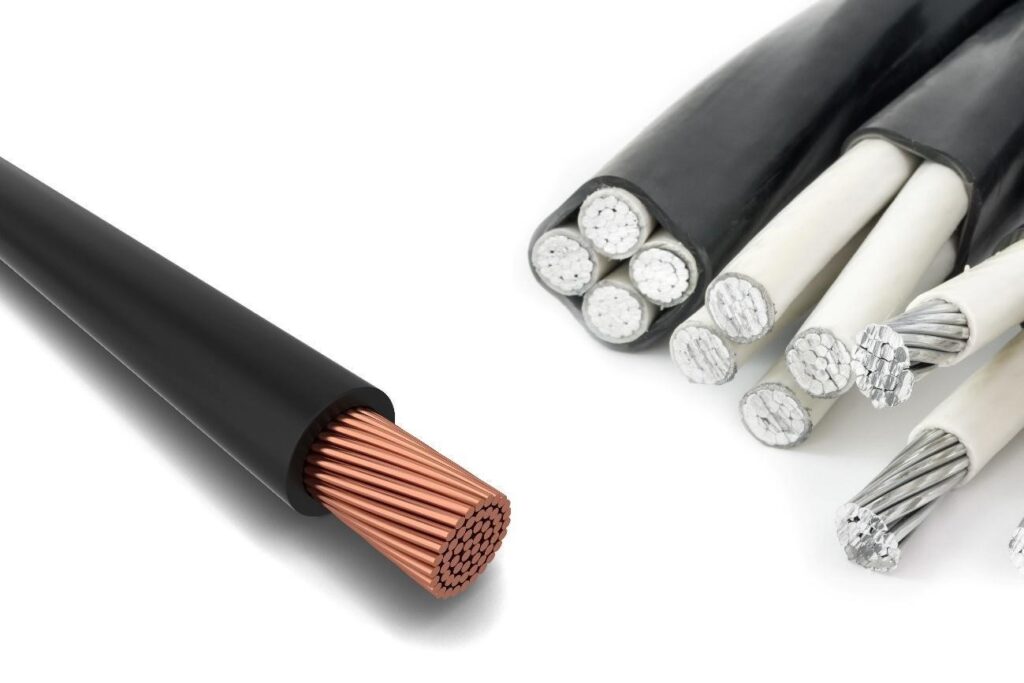
is copper wire better than aluminum
⭐ Is Copper Wire Better Than Aluminum?
Yes, copper wire is generally considered better than aluminum wire for most electrical applications because it is:
-
More conductive
-
Stronger
-
More durable
-
More resistant to heat
-
Less prone to connection failures
However, aluminum wire is still widely used, especially in large power distribution systems, because it is lighter and more cost-effective.
The real question isn’t “Which is better?” but “Which is better for your specific job?”
⭐ Copper vs Aluminum Wire: Key Differences
1. Electrical Conductivity (Copper Wins)
Copper has ~61% higher conductivity than aluminum.
This means:
-
Copper wire can carry more current in a smaller size
-
Aluminum wire must be 1–2 AWG sizes larger to carry the same load
Example:
To replace 4 AWG copper, you typically need 2 AWG aluminum.
2. Strength and Durability (Copper Wins)
Copper is significantly stronger and less brittle than aluminum.
-
Aluminum is softer and more prone to breakage
-
Aluminum expands/contracts more with temperature, which can loosen connections
-
Copper connections stay tight and stable
This is why aluminum branch-circuit wiring from the 1960s–70s was problematic.
3. Weight (Aluminum Wins)
Aluminum is much lighter—about 1/3 the weight of copper.
This makes aluminum a good choice for:
-
Long-distance transmission lines
-
Large feeders
-
Utility systems
-
Solar and industrial runs
Lighter weight means easier installation and less strain on mechanical supports.
4. Cost (Aluminum Wins Easily)
Aluminum wire is significantly cheaper.
-
Aluminum costs 30–50% less than copper
-
Large feeder cables can save thousands of dollars when using aluminum
For budget-sensitive projects, aluminum is often the preferred choice.
5. Corrosion Resistance (Copper Wins)
Copper naturally resists corrosion.
Aluminum forms oxide layers that:
-
Increase resistance
-
Reduce conductivity
-
Can cause overheating if not treated
-
Require special antioxidant compounds
Modern aluminum wiring is much safer than older versions, but copper remains more stable.
6. Heat Performance (Copper Wins)
Copper handles heat better because it has:
-
Lower resistance
-
Less expansion under load
-
More stable connections
Aluminum tends to expand and contract, increasing risk of:
-
Loose terminals
-
Arc faults
-
Overheating
This is why copper is preferred for:
-
Outlets/receptacles
-
Switches
-
Small branch circuits
⭐ Where Copper Wire Is Better
Use copper for:
✔ Residential branch circuits (outlets, lights)
✔ HVAC wiring
✔ Motors and compressors
✔ High-heat environments
✔ Small-gauge conductors
✔ Areas with vibration (aluminum fatigues faster)
✔ Marine applications
Copper is the premium choice where safety and reliability are top concerns.
⭐ Where Aluminum Wire Is Better
Use aluminum for:
✔ Service entrance cables (SE cable)
✔ Main feeders (100A, 150A, 200A+)
✔ Long runs
✔ Utility distribution
✔ Solar power systems
✔ Cost-sensitive projects
Modern AA-8000 aluminum alloys are safe, NEC-approved, and widely used.
⭐ Safety Considerations: Modern Aluminum Wiring
While older 1960s–70s aluminum wire caused many house fires, today’s aluminum conductors are different:
-
Made with AA-8000 alloy
-
Meet strict UL/NEC standards
-
Approved for residential installations
However, they must be installed correctly using:
-
CO/ALR-rated devices
-
Anti-oxidant paste (Noalox, Penetrox)
-
Torque-rated lugs
When installed properly, aluminum can be safe and cost-effective.
⭐ Copper vs Aluminum Wire: Summary Table
| Feature | Copper Wire | Aluminum Wire |
|---|---|---|
| Conductivity | ⭐ Excellent | Good |
| Cost | Expensive | ⭐ Very affordable |
| Weight | Heavy | ⭐ Very lightweight |
| Durability | ⭐ Strong, stable | Softer, more expansion |
| Corrosion | ⭐ Resistant | Forms oxide layer |
| Safety | ⭐ Very safe | Safe if installed correctly |
| Best Use | Branch circuits, motors | Feeders, service drops |
⭐ So… Which Is Better?
For safety and performance → COPPER
For cost and long-run feeders → ALUMINUM
Each metal has its strengths. The best choice depends on:
-
Budget
-
Wire length
-
Ampacity requirements
-
Installation environment


