
If you're working on home wiring or reviewing cable specifications, you might ask:
'What is 2.5 mm cable used for?'
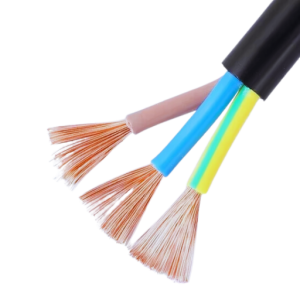
what is 2.5 mm cable used for
The 2.5 mm cable (more precisely, 2.5 mm² cross-sectional area) is one of the most common electrical wire sizes used in residential and commercial buildings. In this article, we’ll explain what it is, its typical applications, and safety considerations you should know.
What Is 2.5 mm² Cable?
The term “2.5 mm cable” refers to a cable with a conductor cross-sectional area of 2.5 square millimeters. It is typically made of copper and is available in:
-
Single-core or multi-core versions
-
Solid or stranded conductors
-
With PVC, XLPE, or LSZH insulation types
Depending on the insulation and installation conditions, it usually carries up to 20–25 amps of current.
Common Uses of 2.5 mm Cable
Here’s where 2.5 mm² cable is most commonly used:
✅ Socket Circuits in Homes
In many countries, especially in the UK and Europe, 2.5 mm cable is the standard size for power socket outlets. It’s typically used in ring or radial circuits to supply general household appliances.
✅ Small Air Conditioners or Water Heaters
For appliances under 5–6 kW, 2.5 mm² cable is often suitable, depending on the distance and breaker rating.
✅ Lighting Circuits with High Load
While 1.5 mm² is more typical for lighting, 2.5 mm cable may be used when:
-
The circuit is long (voltage drop needs to be reduced)
-
It serves a large number of high-wattage lights
✅ Power Outlets in Garages, Workshops, or Kitchens
These areas may require more durable circuits with slightly higher capacity due to frequent tool or appliance use.
Ampacity of 2.5 mm² Cable (Copper)
The current rating depends on installation conditions:
| Installation Method | Typical Ampacity |
|---|---|
| In conduit/trunking (clipped) | ~20–25 A |
| In free air | Up to 27 A |
| Buried underground (with protection) | ~18–22 A |
Always check local wiring regulations and consider voltage drop, especially for long runs.
Single-Core vs Multi-Core 2.5 mm Cable
-
Single-core: Often used in conduit or trunking; flexible and easy to route.
-
Twin & Earth (2-core + earth): Common in UK domestic wiring for sockets.
-
3-core: Used where two live conductors and an earth are needed (e.g., two-way switching or three-phase systems).
Safety and Installation Tips
-
Match cable size with circuit breaker/fuse rating
-
Avoid exceeding voltage drop limits over long distances
-
Ensure proper grounding/earthing
-
Use heat- and moisture-resistant insulation in kitchens or outdoor spaces
Conclusion
So, what is 2.5 mm cable used for?
It’s widely used in socket outlets, small appliances, and moderate-load circuits—making it a go-to choice for residential and light commercial electrical installations.
It strikes a balance between current-carrying capacity and flexibility, making it versatile, reliable, and safe when installed according to local electrical codes.
Need 2.5 mm Cable for Your Project?
We supply high-quality 2.5 mm² copper cables with various insulation options (PVC, XLPE, LSZH) for residential, commercial, and industrial use. Contact us today to find the best option for your needs.


