
If you're wondering 'what is control cable?', you're likely working on an automation, machinery, or electrical installation project and need to understand the cables used to transmit control signals. In this guide, we’ll explain what control cables are, how they work, and where they’re used.
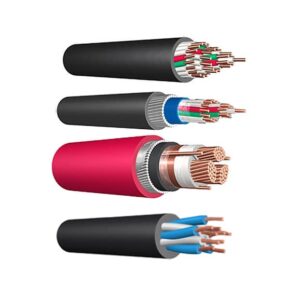
what is control cable
🎛️ Definition: What Is a Control Cable?
A control cable is a multi-core electrical cable designed to carry low-voltage control signals. These signals are used to operate and coordinate automated systems, such as motors, relays, conveyors, or industrial machinery.
Control cables are not intended for power transmission; instead, they serve to relay commands and monitor system performance.
🧱 Structure of a Control Cable
While the design can vary depending on the environment and standards, most control cables consist of:
-
Conductor – Typically stranded copper for flexibility.
-
Insulation – PVC, PE, or XLPE for electrical isolation.
-
Core Arrangement – Numbered or color-coded for easy identification.
-
Shielding (optional) – Foil or braided for EMI protection.
-
Outer Sheath – Protects against mechanical stress, oil, moisture, and chemicals.
Some control cables may also include armour (like steel tape or wire) for added durability in harsh environments.
⚙️ What Is Control Cable Used For?
Control cables are used to connect control panels with various electromechanical devices. They are widely found in:
-
Industrial automation systems
-
Control circuits in machines
-
Conveyor systems
-
Elevators and cranes
-
Robotics and production lines
-
HVAC systems and building automation
In short, control cables are the nervous system of automated machinery and equipment.
🧭 Types of Control Cables
| Type | Features | Typical Use |
|---|---|---|
| Unshielded Control Cable | Basic, cost-effective | Clean environments |
| Shielded Control Cable | EMI protection | High-interference zones |
| Flexible Control Cable | High bending tolerance | Moving machine parts |
| Armoured Control Cable | Mechanical protection | Underground or outdoor areas |
📊 Control Cable vs Power Cable
| Feature | Control Cable | Power Cable |
|---|---|---|
| Function | Transmits signals | Transmits electricity |
| Voltage | Low (usually <600V) | Low to high voltage |
| Cores | Many small control wires | Fewer, thicker conductors |
| Applications | Automation & control | Power distribution |
🌐 Common Standards for Control Cables
-
IEC 60228 / IEC 60332 – International conductor and flame-retardant standards
-
VDE 0815 / 0250 – German industrial standards
-
UL / CSA Certified – For North American markets
✅ Conclusion: Control Cables Enable Smart Systems
Control cables are essential for sending commands, transmitting data, and ensuring safe, reliable operation of automated systems. Whether you're wiring an industrial motor, setting up a control panel, or building a smart production line, using the right control cable is critical.
📦 Looking for Control Cables?
At TOT Wire & Cable, we supply a full range of high-quality PVC, XLPE, shielded, armoured, and flexible control cables, compliant with IEC, UL, and CE standards.
👉 Contact us now for specs, pricing, and fast delivery!


