
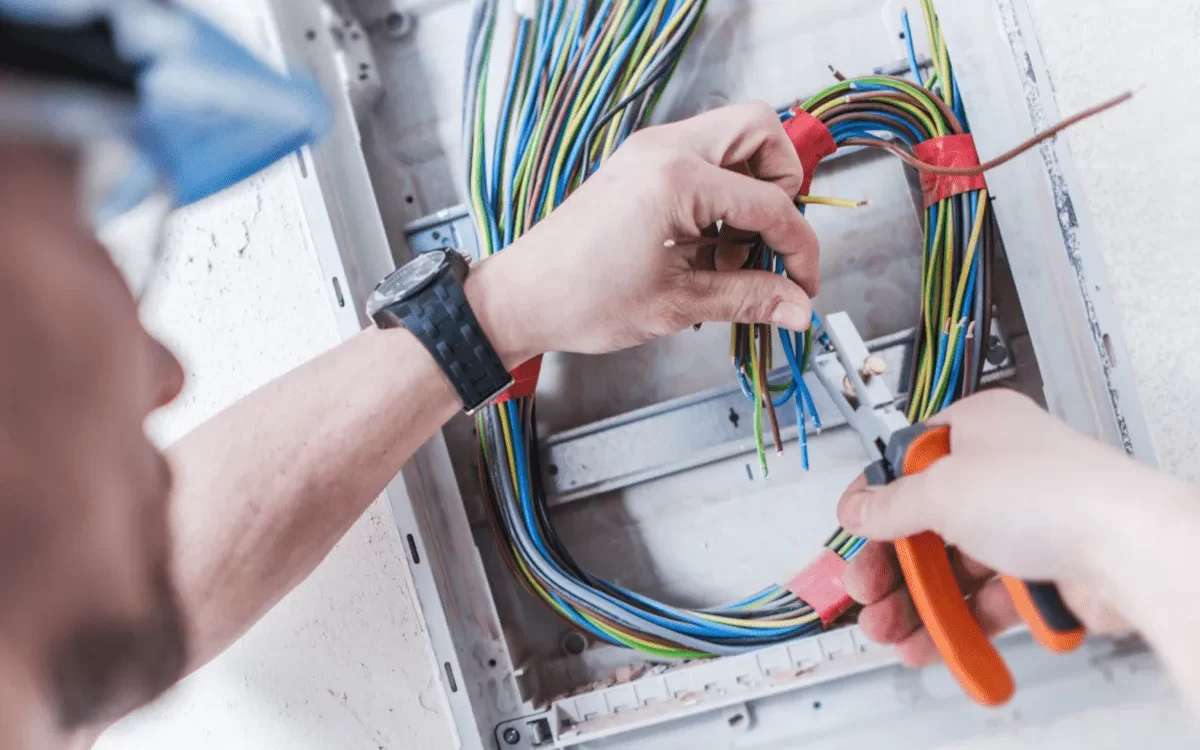
Low Voltage Wiring in Commercial Buildings: Systems & Code Requirements
Commercial buildings require sophisticated low voltage infrastructure to support business operations, safety systems, and building automation. Unlike residential applications, commercial installations must meet stricter codes, accommodate higher data demands, and integrate multiple building systems.
Read more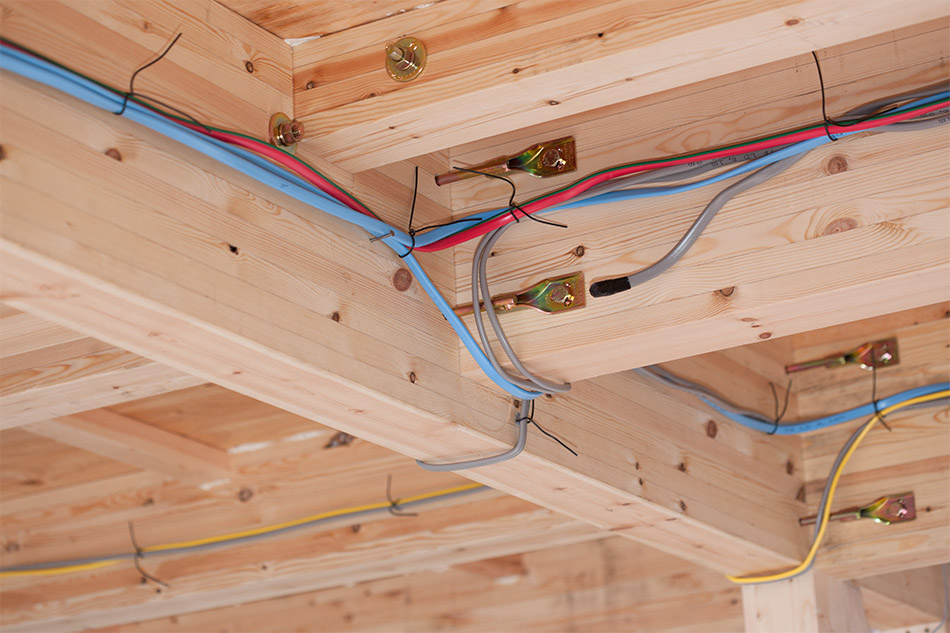
Low Voltage Wiring for New Construction: Complete Planning Guide
Installing low voltage wiring during new construction is significantly more cost-effective and easier than retrofitting. With walls open and access available, you can create a comprehensive system that supports modern home technology while maintaining clean aesthetics and optimal performance.
Read more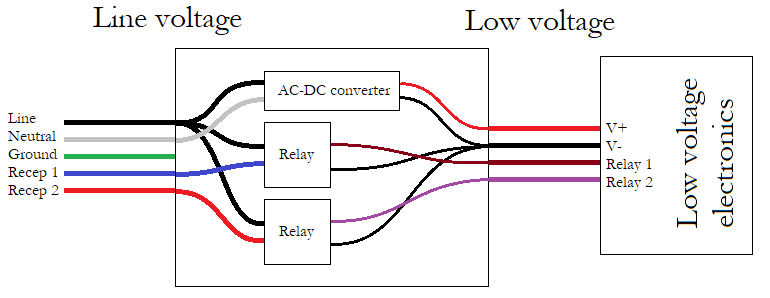
AC Low Voltage Wire: Complete Guide for Safe Installation
AC low voltage wire carries alternating current at voltages typically below 50 volts, commonly used for lighting systems, doorbells, thermostats, and landscape lighting. Unlike standard household wiring that operates at 120V or 240V, low voltage systems provide safer installation options for many applications.
Read more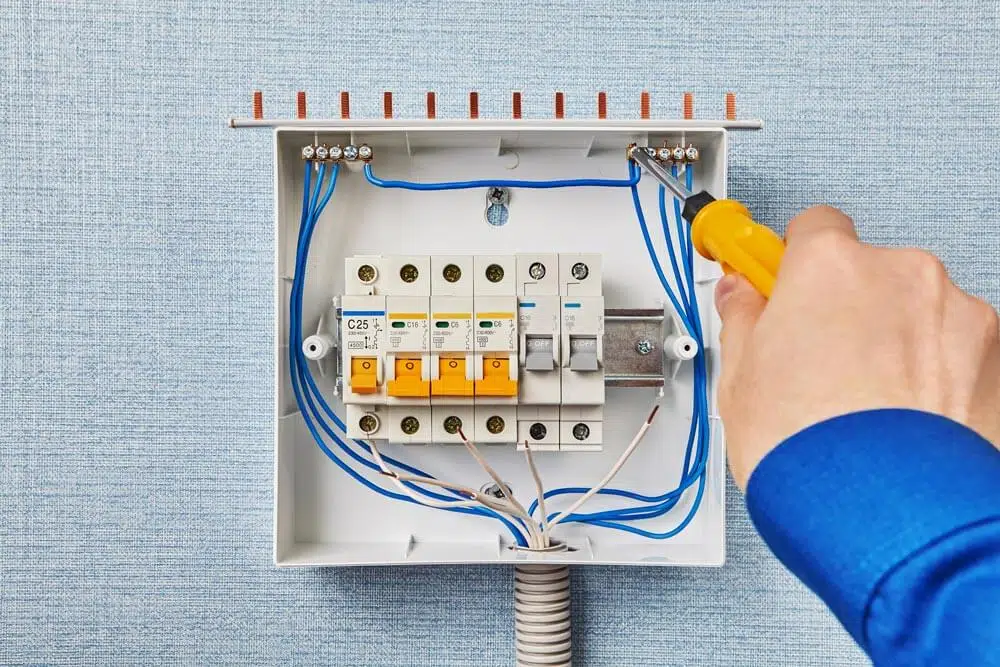
Commercial Low Voltage Wiring: Complete Guide for Business Applications
Commercial low voltage wiring encompasses structured cabling systems operating under 50 volts, including data networks, security systems, fire alarms, HVAC controls, and telecommunications infrastructure. These systems require specialized installation techniques, code compliance, and professional-grade components to ensure reliable operation in business environments.
Read more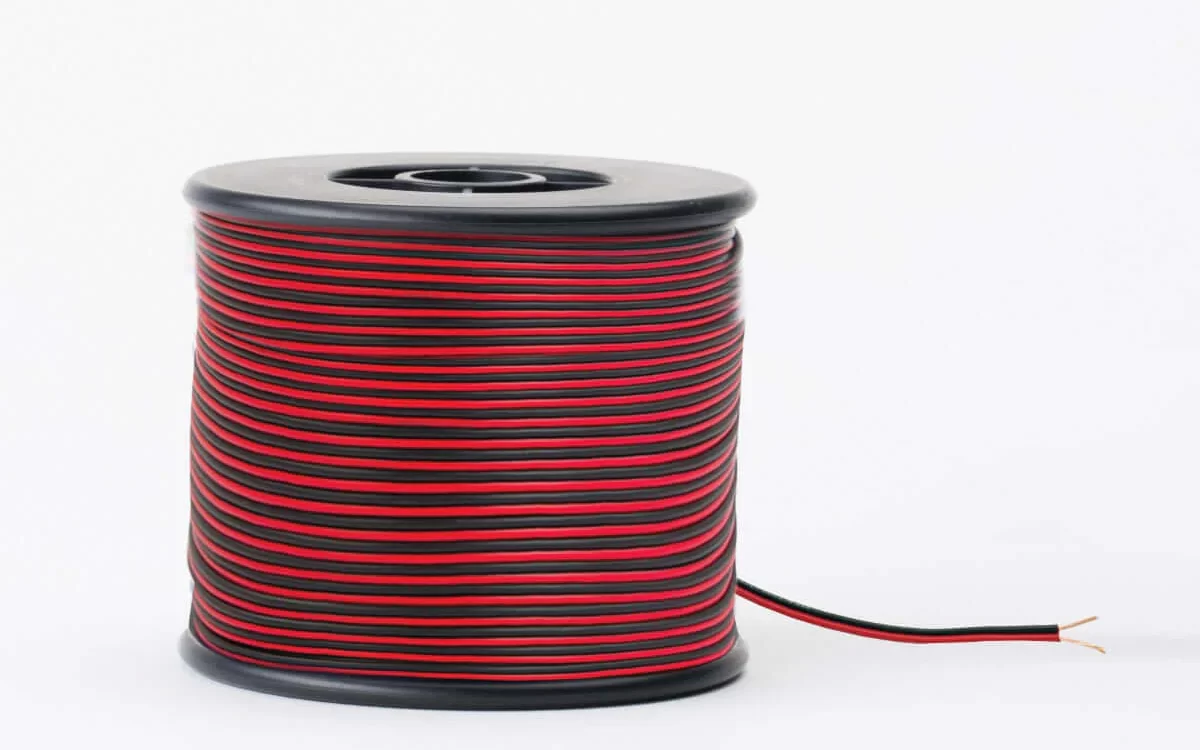
Wire for Low Voltage LED Lighting: The Complete Guide
For low voltage LED lighting systems (12V or 24V), use 12 AWG to 18 AWG stranded copper wire, depending on the total wattage and cable run length. Most residential LED installations work well with 14 AWG or 16 AWG wire, while longer runs or higher wattage systems may require 12 AWG to minimize voltage drop.
Read more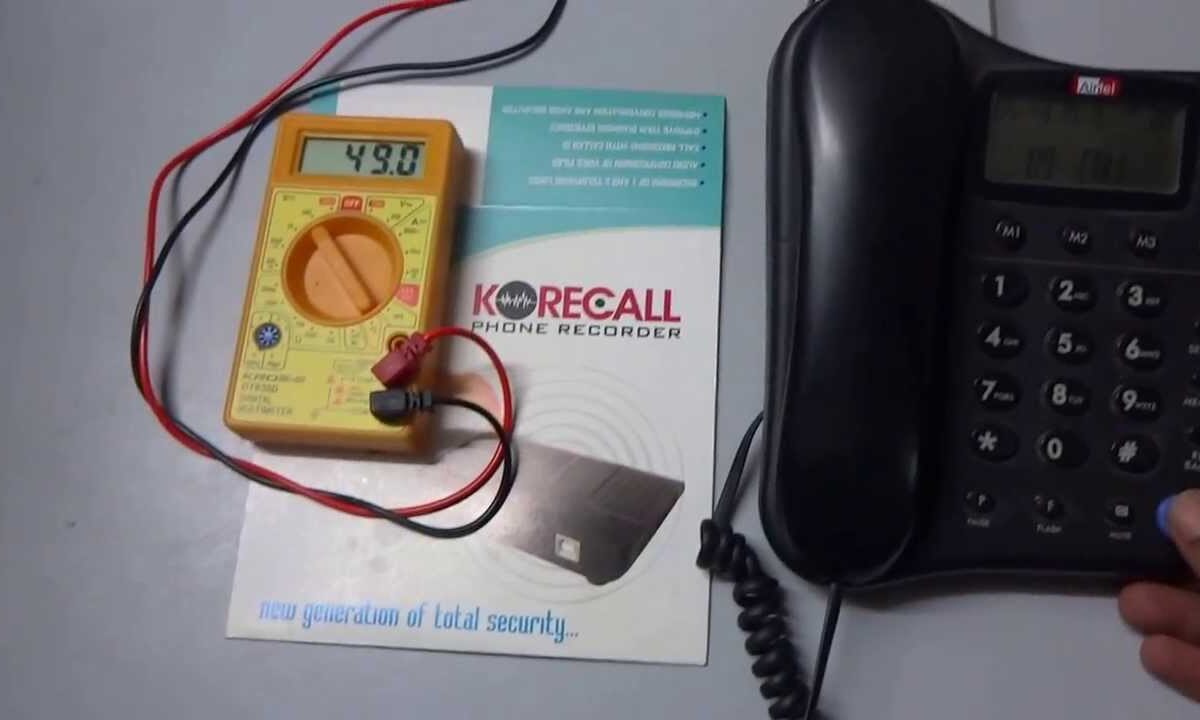
Telephone Cable Voltage: What You Need to Know
Telephone cables typically carry 48 volts DC during normal operation. This voltage is supplied by the telephone company's central office through the phone line to power your telephone equipment. However, the voltage can vary significantly depending on the line status - it ranges from 6-12 volts when the phone is off-hook (in use) and can spike up to 90-100 volts AC during ringing.
Read more
Direct Burial MC Cable: Complete Guide for Underground Installation
When you need to run electrical wiring underground, direct burial MC cable offers a reliable, code-compliant solution that eliminates the need for conduit in many applications. This specialized metal-clad cable is engineered specifically for direct underground installation.
Read more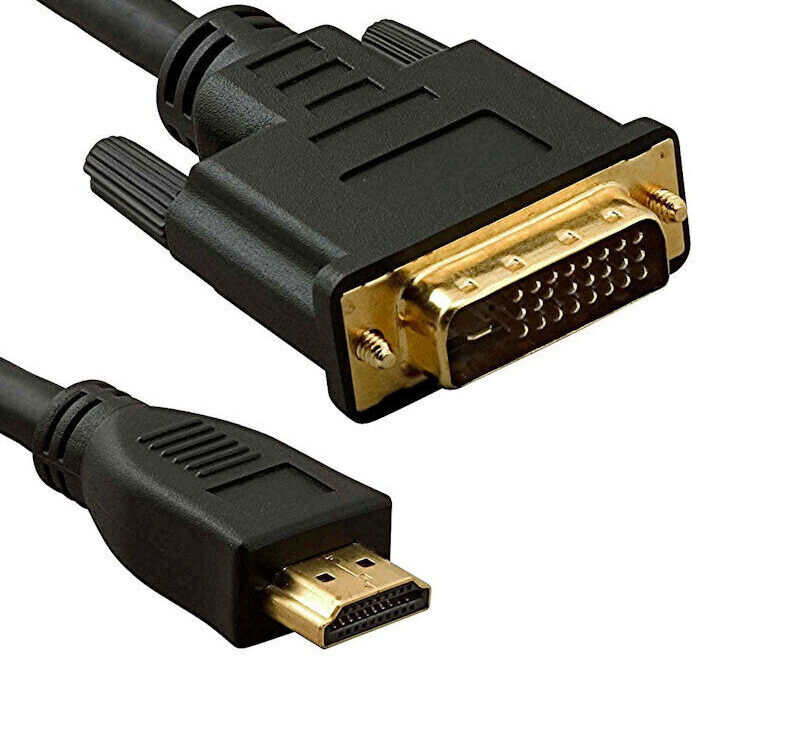
HDMI Cable for Computer Monitor: A Complete Guide
Looking for the best HDMI cable for your computer monitor? Whether you're setting up a home office, gaming station, or professional workstation, choosing the right HDMI cable ensures optimal performance, crisp visuals, and a seamless experience. In this guide, we’ll cover everything you need to know about HDMI cables for monitors — from compatibility to cable types, and what features to look for.
Read more
Computer Monitor Cable Types: Complete Guide for Optimal Display Performance
Computer monitor cable types play a crucial role in determining your display quality, refresh rates, and overall viewing experience. With numerous connection standards available, choosing the right monitor cable can significantly impact your productivity, gaming performance, and multimedia consumption. This comprehensive guide explores all major computer monitor cable types, their capabilities, and ideal use cases.
Read more
What is Flat Flexible Cable (FFC) and Why It Matters
Flat Flexible Cable (FFC) is a type of electrical cable that is flat, thin, and highly flexible, designed for compact and high-density electronic applications. These cables are commonly used in consumer electronics, automotive systems, printers, robotics, and other devices where space-saving and flexibility are crucial.
Read more- Low Voltage Cables – LV
- Medium Voltage Cables – MV
- High Voltage Cables-HV
- Steel Wire Armored Cable (SWA Cable)
- XLPE Insulated Power Cables
- Mineral Insulated Cable (MICC/MI Cable)
- TPS Cable
- Control Cable
- Instrumentation Cable
- Coaxial Cable
- VFD Cable
- Computer Cable
- Electrical Wire
- MC Cable
- NM-B (Non-Metallic Sheathed) Copper Wire
- UF-B Underground Feeder Cable
- MTW Wire
- Prefabricated branch cables
- 4/0 Type W Cable
- Trunk Trailer ABS Cable
- SO Cable
- LSZH Cable
- Copper Ground Rods
- Copper Clad Steel Antenna Wire
- High Temperature Wire
- EV Automotive High Voltage Silicone Rubber Cable
- Submersible Pump Wire
- Floating cable
- LC to LC Fiber Patch Cables
- Flexible Cable
- Drag Chain Cables
- Silicone Rubber Low Temperature Resistant Cable
- All-Aluminum Conductors for Overhead Power Lines
- Aerial Bundled Cable (ABC Cable)
- Aerial Insulation Line (AIL)
- Bare Stranded Conductors
- Wind Farm Cables
- Overhead Service Drop Cable
- Concentric Service Cable
- Telephone Drop Cable
- Solar PV Cable
Recent Posts


